Custom Boxes Aazz

Category: Industry Insights

  • How to Choose the Best Packaging Companies in the UK

    Packaging guide

    How to Choose the Best Packaging Companies in the UK

    There are hundreds of packaging companies in the UK, from huge corrugated mills to small digital print studios. Choosing the right one can save you money, protect your products and make your brand look far more professional.

    This guide explains the main types of packaging companies in the UK, what to compare, the questions to ask and the red flags to watch for, so you can choose a supplier with confidence.

    • Expert UK advice
    • Practical tips
    • Free quotes
    • Free UK delivery

    Types of packaging companies in the UK

    Not every packaging company does the same job. So the first step is to understand which type suits your needs.

    Stock packaging suppliers

    These companies sell standard boxes, mailers and bags in fixed sizes. They are quick and cheap, but every box looks the same and rarely fits your product perfectly.

    Custom packaging companies

    Custom suppliers make boxes to your size and print them with your branding. As a result, your packaging fits properly and looks unique. Many, including us, offer low minimums and free design help.

    Large-scale manufacturers

    Corrugated mills and big carton printers are built for very large runs. Therefore, they offer the lowest unit prices but often need tens of thousands of units.

    Specialist suppliers

    Some companies focus on one area, such as rigid luxury boxes, food packaging, labels or bottles. They are useful when you have very specific needs.

    What to compare before you choose

    Price matters, but it is only one part of the decision. First, compare minimum order quantities, because a low unit price is no use if you must buy 10,000 boxes. Second, check what is included. For example, some quotes exclude design, plates or delivery, which can add a lot to the final cost.

    Third, look at lead times and how reliably they are met. Fourth, ask about samples and proofs, so you can check quality before committing. Finally, read independent reviews, such as Google reviews, to see how the company treats customers when something goes wrong.

    FactorWhat to look for
    Minimum orderLow enough to test and grow
    PricingItemised, with VAT and delivery shown
    Design helpDielines, artwork checks and 3D proofs
    Lead timeClear, confirmed before you pay
    ReviewsConsistent, recent and independent
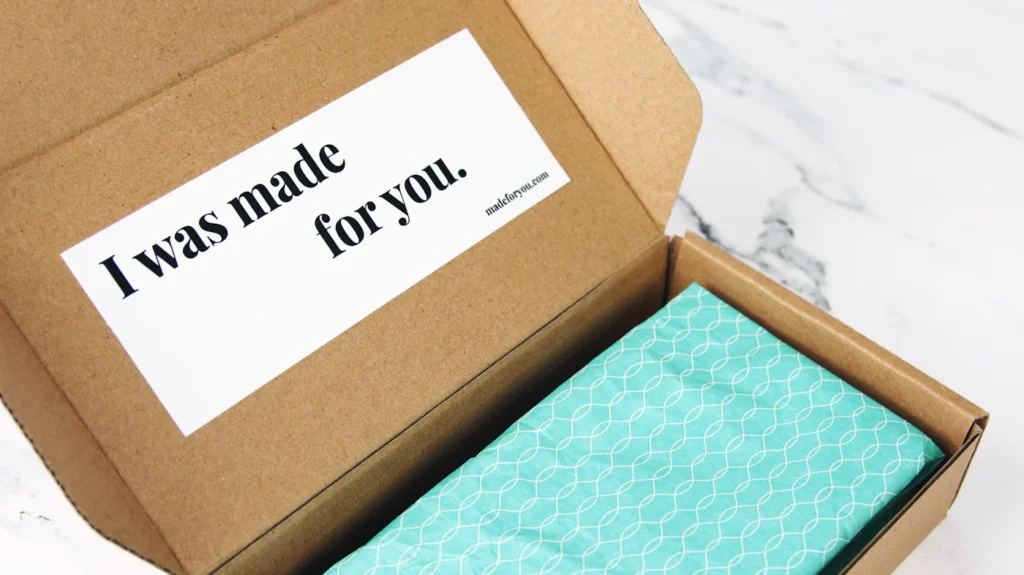
    Packaging companies uk: Kraft custom mailer box with printed thank-you card and tissue paper inside

    Questions to ask a packaging company

    • What is your minimum order for my box style?
    • Is delivery to my UK address included?
    • Will I see a proof or a sample before printing?
    • Which board grade do you recommend for my product, and why?
    • How long will production and delivery take?
    • Can you keep my dieline on file for reorders?

    A good packaging company will answer these questions clearly and quickly. In contrast, vague answers about price or timing are often a warning sign.

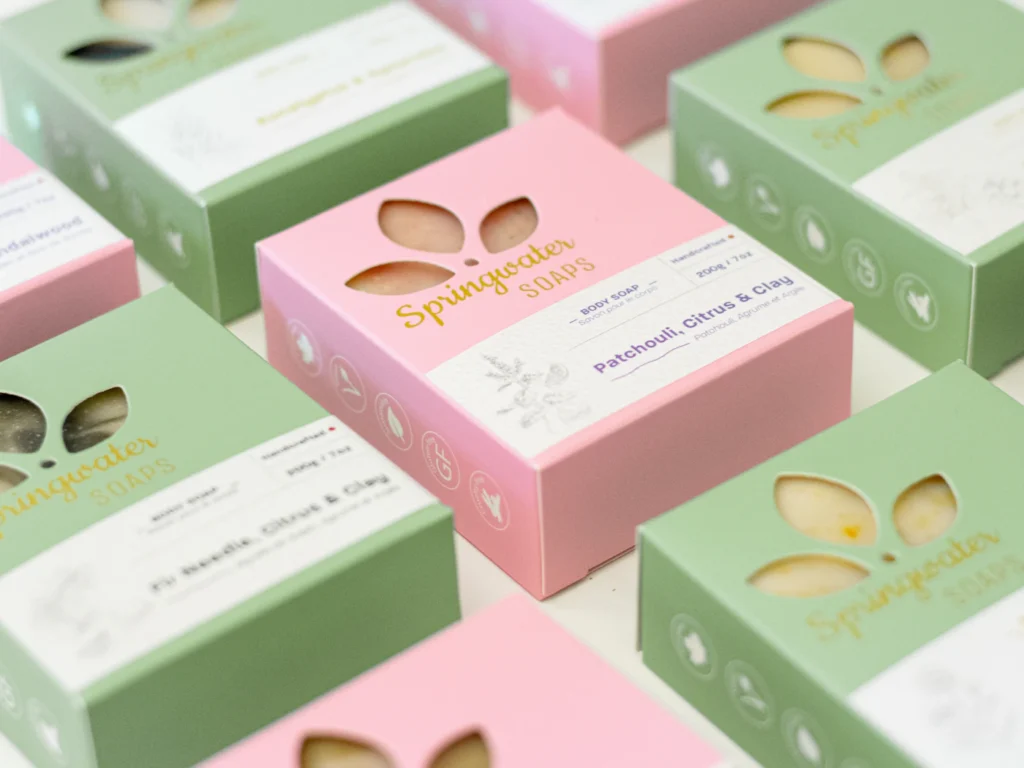
    Printed retail product boxes in green and pink with die-cut details

    Red flags to avoid

    Be cautious of quotes that look much cheaper than others, because they may exclude plates, tooling or delivery. Also, avoid suppliers who will not show a proof before printing, or who cannot explain the board they are using. Finally, check that the company has a real address and contactable team. Our office, for example, is at 7 Elthorne Rd, London NW9 8BH, and our customers rate us 5.0 on Google.

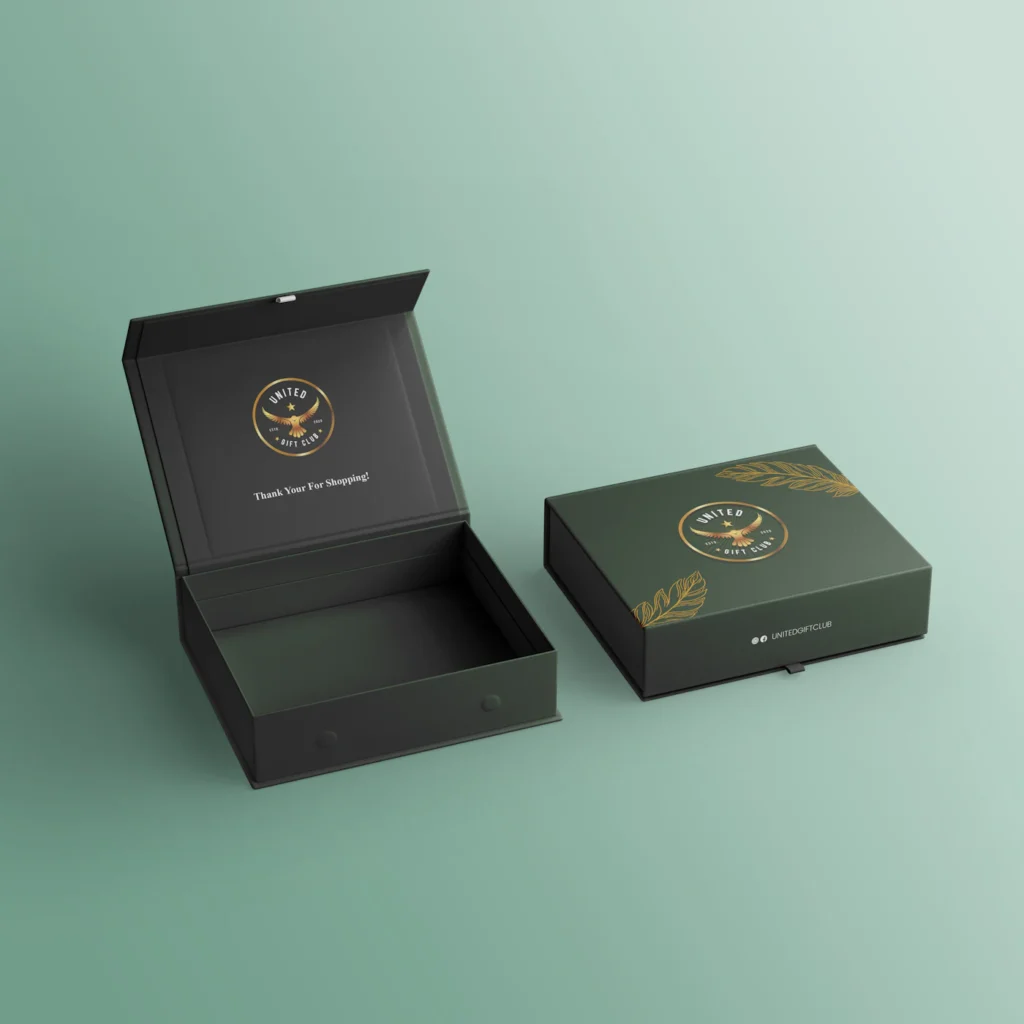
    Black rigid magnetic gift boxes with gold foil logo
    FAQ

    Packaging companies UK

    Ask for a free quote

    How do I find a reliable packaging company in the UK?

    Compare minimum orders, itemised pricing, lead times and independent reviews, and always ask for a proof or sample before ordering.

    Are custom packaging companies expensive?

    Not necessarily. Digital printing allows short runs from around 50 boxes, so small businesses can afford branded packaging.

    Should I choose a local packaging company?

    Location matters less than service, quality and reliable delivery. Many UK suppliers deliver nationwide with delivery included.

    Ready to create your custom packaging?

    Tell us your product size, quantity and deadline, and we will send a price and a free 3D mock-up.

  • What Is the Standard Business Card Size in the UK?

    Print size guide

    What Is the Standard Business Card Size in the UK?

    The standard business card size in the UK is 85 × 55mm, which is about 3.35 × 2.17 inches. It is the same size used across most of Europe, and it fits neatly into wallets, card holders and business card boxes.

    In this guide, we explain the UK business card size in detail, including bleed, safe areas, paper weights and the most popular alternative sizes, so you can set up your artwork correctly the first time.

    • 85 × 55mm standard
    • 3mm bleed
    • 350–450gsm card
    • Print-ready tips

    The standard UK business card size

    The standard business card size in the UK is 85mm wide by 55mm tall. In inches, that is roughly 3.35 × 2.17 inches, and in pixels at 300dpi it is about 1004 × 650 pixels. Most UK printers, card holders and business card boxes are designed around this size, so it is the safest choice for almost every business.

    The UK size is slightly different from the US standard. American business cards measure 3.5 × 2 inches, which is about 88.9 × 50.8mm. As a result, US cards are a little longer and narrower. If you work with international clients, it is worth knowing the difference, especially if you plan to print in one country and use the cards in another.

    Quick answer: design your artwork at 91 × 61mm (including 3mm bleed on each side), keep important text 3–5mm inside the trim line, and the finished card will be 85 × 55mm.

    Business card size uk: Printed retail product boxes in green and pink with die-cut details

    Bleed and safe area explained

    Printing presses cannot cut exactly on the edge of a design every time. Therefore, designers add bleed, which is extra background that extends beyond the trim line. For UK business cards, the usual bleed is 3mm on every side, so your artwork file should measure 91 × 61mm.

    The safe area works the other way. It is a margin inside the trim line where you should not place important text or logos. Usually it is 3mm to 5mm. As a result, nothing important is trimmed off, even if the cut moves slightly.

    AreaSize
    Finished card (trim)85 × 55mm
    Artwork with 3mm bleed91 × 61mm
    Safe area (4mm margin)77 × 47mm
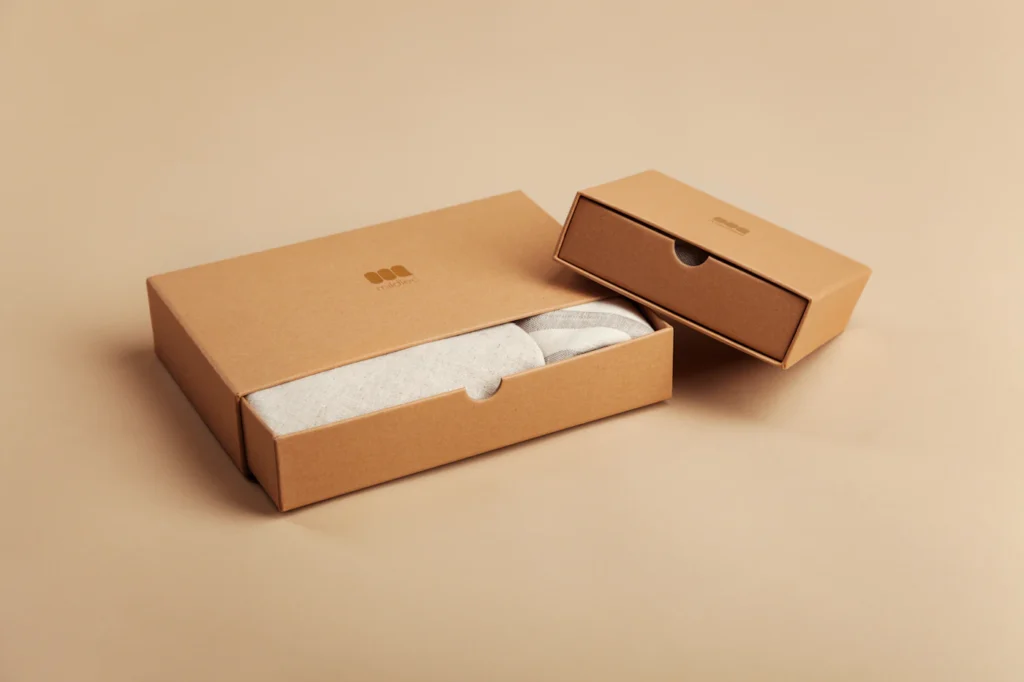
    Kraft box with printed sleeve and drawer-style insert

    Business card sizes compared

    Although 85 × 55mm is the UK standard, several other sizes are popular for brands that want to stand out.

    FormatSizeNotes
    UK and European standard85 × 55mmFits all standard holders
    US standard88.9 × 50.8mm3.5 × 2 inches
    Credit card size85.6 × 54mmSame as bank cards
    Square55 × 55mm or 65 × 65mmModern and eye-catching
    Slim85 × 40mmMinimal, stylish look
    Folded85 × 110mm flatFolds to standard size

    Square and slim cards are memorable. However, they may not fit standard card holders, so consider how your clients will store them.

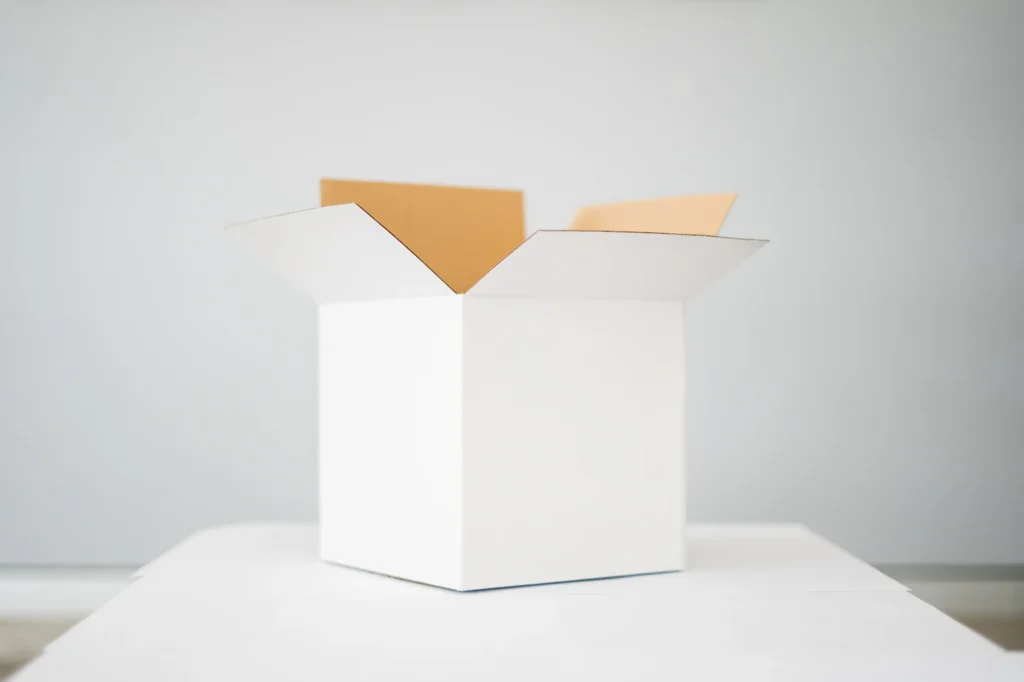
    Open white folding carton box on a white table

    Choosing paper weight and finish

    The thickness of a business card affects how it feels. Most UK business cards are printed on 350gsm to 450gsm card, which feels sturdy and professional. Premium cards often use 600gsm or more, or two sheets laminated together.

    In addition, finishes change the look and feel. Matte and soft-touch lamination give a modern, velvety surface, while gloss makes colours more vivid. Meanwhile, foil, spot UV and embossing add a luxury touch to logos and names. For eco-conscious brands, recycled and kraft card are popular choices.

    Printed retail product boxes in green and pink with die-cut details

    Setting up your business card artwork

    Getting the file right saves time and money. First, set your document to 91 × 61mm with 3mm bleed. Second, use CMYK colour mode, because printing presses use cyan, magenta, yellow and black inks. Third, make sure images are at least 300dpi. Finally, convert fonts to outlines or embed them in a PDF, so they print exactly as intended.

    If you include a QR code, test it before printing and make it at least 15mm wide. Also, keep a clear margin around it so phones can scan it easily.

    Kraft box with printed sleeve and drawer-style insert

    Business card boxes and storage

    Once your cards are printed, a branded box keeps them clean and makes a great impression when you hand over a fresh set. Standard business card boxes are sized to hold 85 × 55mm cards, usually in stacks of 100 to 250. See our business card boxes if you would like a printed box to match your cards.

    Open white folding carton box on a white table
    FAQ

    Business card size UK

    Ask for a free quote

    What size is a UK business card in mm?

    A standard UK business card is 85mm × 55mm. With 3mm bleed on each side, the artwork size is 91mm × 61mm.

    What size is a business card in pixels?

    At 300dpi, a UK business card is about 1004 × 650 pixels. With bleed, set up your file at about 1075 × 720 pixels.

    Is a UK business card the same size as a credit card?

    They are very close. A credit card is 85.6 × 54mm, while a standard UK business card is 85 × 55mm.

    What paper weight is best for business cards?

    Most businesses choose 350gsm to 450gsm. For a luxury feel, choose 600gsm or more, or a laminated card.

    Ready to print your business cards?

    Send us your design or idea, and we will check the size, bleed and safe area for you before printing.