
Industry Insights
What Is Cardboard? Complete Guide to Cardboard Packaging in the UK
May
Cardboard is one of those materials you see every single day but probably do not think much about. From delivery boxes arriving at your door to retail packaging sitting on supermarket shelves, cardboard plays a massive role in packaging across the UK.
Whether you run an online business, own a retail shop, or simply want better packaging for your products, understanding cardboard can help you make smarter packaging decisions. It affects product protection, branding, shipping costs, sustainability, and even customer experience.
For businesses investing in custom boxes UK solutions, cardboard is often the foundation of effective packaging. It is affordable, versatile, recyclable, and suitable for almost every industry.
This guide explains what cardboard is, how it is made, the different types available, and why it matters so much in modern packaging.
Understanding What Cardboard Really Is
Cardboard is a thick paper-based material commonly used for packaging, storage, shipping, and product presentation. It is made from paper pulp, usually sourced from recycled paper, wood fibres, or both.
People often use the word “cardboard” to describe several packaging materials, including:
- Corrugated cardboard
- Paperboard
- Carton board
- Kraft board
Each type has different strengths, thicknesses, and uses.
In the packaging industry, cardboard is valued because it combines strength with lightweight performance. That means you can protect products without making packaging unnecessarily heavy or expensive.
Businesses looking for custom packaging boxes UK options often choose cardboard because it can easily be printed, cut, folded, and customised.
How Cardboard Is Made
Cardboard production starts with paper pulp. Manufacturers process wood chips or recycled paper into fibres, mix them with water, and create sheets that are pressed and dried.
The exact process depends on the type of cardboard being produced.
Basic Cardboard Manufacturing Process
| Stage | What Happens |
|---|---|
| Pulping | Wood fibres or recycled paper are broken down |
| Cleaning | Impurities are removed from the pulp |
| Pressing | Water is squeezed out |
| Drying | Sheets are heated and dried |
| Layering | Multiple layers may be combined |
| Corrugating | Fluted layers are added for strength |
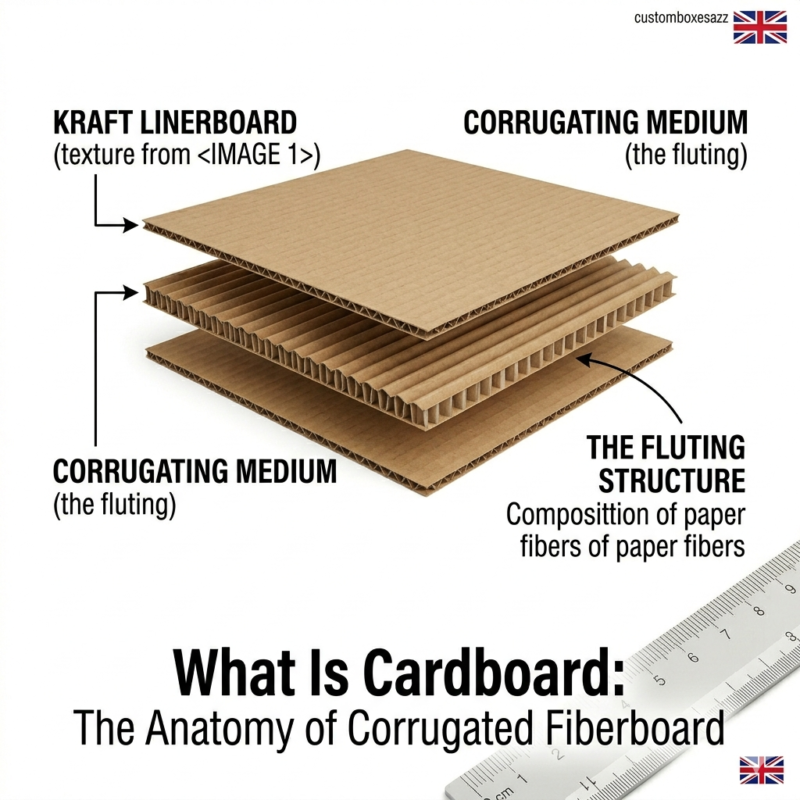
Corrugated cardboard involves an extra stage where a wavy middle layer is glued between flat outer sheets. This design dramatically improves strength and cushioning.
That is why corrugated cardboard is widely used in shipping boxes and protective packaging.
The Main Types of Cardboard
Not all cardboard is the same. Different industries use different grades depending on weight, durability, printing needs, and presentation.
Corrugated Cardboard
Corrugated cardboard is the strongest and most common packaging material for shipping.
It consists of:
- An outer liner
- A fluted middle layer
- An inner liner
The fluted structure creates strength without adding too much weight.
This material is ideal for:
- E-commerce boxes
- Moving boxes
- Retail shipping
- Industrial packaging
- Protective packaging
Companies using protective packaging UK services often rely heavily on corrugated board.
Paperboard
Paperboard is thinner and smoother than corrugated cardboard. It is commonly used for:
- Cosmetic boxes
- Food packaging
- Pharmaceutical cartons
- Luxury retail packaging
Because it prints beautifully, it is often used in premium branding.
Many luxury gift boxes UK products are made from rigid paperboard for a high-end appearance.
Kraft Cardboard
Kraft cardboard is known for its natural brown appearance and eco-friendly appeal.
It is popular among:
- Sustainable brands
- Organic product companies
- Handmade product sellers
Kraft packaging gives products a rustic and environmentally conscious feel.
Rigid Cardboard
Rigid cardboard is much thicker and stronger than folding cartons.
It is often used for:
- Premium electronics
- Jewellery packaging
- Presentation boxes
- Luxury gift packaging
Businesses investing in custom gift packaging UK often choose rigid cardboard for a premium customer experience.
Comparison of Common Cardboard Types
| Cardboard Type | Strength | Best Use | Printing Quality | Cost |
|---|---|---|---|---|
| Corrugated | High | Shipping boxes | Medium | Affordable |
| Paperboard | Medium | Retail packaging | Excellent | Moderate |
| Kraft Board | Medium | Eco packaging | Good | Moderate |
| Rigid Board | Very High | Luxury packaging | Excellent | Premium |
Request a Quote
Why Cardboard Is So Popular in Packaging
There are many reasons cardboard dominates the packaging industry in the UK.
Lightweight but Strong
Cardboard provides excellent protection without adding excessive shipping weight.
That matters because:
- Lighter packaging reduces courier costs
- Products are easier to handle
- Storage becomes simpler
This is especially useful for e-commerce brands using custom packaging for small business UK.
Cost-Effective
Compared to plastic, metal, or wood packaging, cardboard is far more affordable.
It is:
- Easy to manufacture
- Easy to customise
- Cheap to transport
- Readily available
Small businesses often start with cardboard packaging because it balances quality and affordability.
Excellent for Branding
Cardboard surfaces are easy to print on. You can add:
- Logos
- Colours
- Product information
- QR codes
- Finishes
- Graphics
This makes cardboard ideal for branded custom boxes London businesses rely on.
Eco-Friendly and Recyclable
One major reason cardboard remains popular is sustainability.
Most cardboard packaging is:
- Recyclable
- Biodegradable
- Reusable
- Made from recycled materials
Customers across the UK increasingly prefer environmentally friendly packaging.
Brands using bespoke packaging UK solutions often choose recyclable cardboard to align with sustainability goals.
Different Flute Types in Corrugated Cardboard
The “flute” is the wavy middle layer inside corrugated cardboard.
Different flute sizes provide different levels of protection and print quality.
| Flute Type | Thickness | Best For |
|---|---|---|
| A Flute | Thick | Fragile products |
| B Flute | Medium | Retail packaging |
| C Flute | Standard | Shipping boxes |
| E Flute | Thin | High-quality printing |
| F Flute | Very Thin | Luxury retail boxes |
Choosing the right flute matters because it affects:
- Strength
- Cushioning
- Appearance
- Storage space
Cardboard vs Paperboard
People often confuse cardboard and paperboard.
Here is a simple breakdown.
| Feature | Cardboard | Paperboard |
|---|---|---|
| Thickness | Thicker | Thinner |
| Strength | Higher | Moderate |
| Main Use | Shipping | Retail packaging |
| Structure | Often corrugated | Smooth sheets |
| Printing | Good | Excellent |
Both materials are widely used in custom packaging boxes UK manufacturing.
Common Uses of Cardboard in the UK
Cardboard packaging is everywhere because it works across almost every industry.
Retail Packaging
Retailers use cardboard for:
- Display boxes
- Product cartons
- Shelf-ready packaging
- Promotional packaging
Cardboard gives brands flexibility in design and presentation.
E-Commerce Packaging
Online shopping has dramatically increased cardboard demand.
Shipping boxes need to:
- Protect products
- Survive transit
- Look professional
- Be cost-effective
This is why businesses often invest in custom packaging boxes London services.
Food Packaging
Many takeaway and food delivery businesses use cardboard because it is:
- Lightweight
- Safe
- Recyclable
- Affordable
Examples include:
- Pizza boxes
- Bakery boxes
- Coffee sleeves
- Sandwich cartons
Gift Packaging
Cardboard is commonly used for:
- Luxury gift boxes
- Seasonal packaging
- Corporate gifts
- Subscription boxes
Premium finishes can transform simple cardboard into elegant presentation packaging.
Brands looking for luxury gift boxes UK often choose rigid cardboard with magnetic closures or textured finishes.
Why Businesses Prefer Custom Cardboard Packaging
Plain packaging may protect products, but custom cardboard packaging helps brands stand out.
Custom packaging allows businesses to:
- Build stronger branding
- Improve customer experience
- Increase perceived value
- Create memorable unboxing moments
This is especially useful for competitive industries like cosmetics, fashion, candles, and skincare.
At custom boxes UK, many businesses choose personalised cardboard packaging because it combines practicality with marketing power.
Popular Cardboard Finishes for Packaging
The finish applied to cardboard affects how packaging looks and feels.
Matte Finish
Matte packaging looks smooth and modern. It reduces glare and creates a premium feel.
Gloss Finish
Gloss coatings make colours appear brighter and more vibrant.
Soft-Touch Lamination
Soft-touch finishes create a velvety texture often used for luxury products.
Foil Stamping
Metallic foil adds elegance and works beautifully on premium packaging.
Embossing and Debossing
These techniques create raised or pressed designs for added sophistication.
Businesses investing in bespoke packaging UK often combine several finishes for stronger branding.
How Thick Is Cardboard?
Cardboard thickness depends on its purpose.
Thickness Guide
| Type | Thickness | Best Use |
|---|---|---|
| Paperboard | 0.3–0.8mm | Light retail boxes |
| Single-wall Corrugated | 3–5mm | Standard shipping boxes |
| Double-wall Corrugated | 5–7mm | Heavy shipping |
| Triple-wall Corrugated | 10mm+ | Industrial shipping |
| Rigid Board | 1–4mm | Luxury boxes |
Choosing the right thickness ensures products are protected and packaging remains cost-effective.
Cardboard Sustainability
Most cardboard is recyclable and biodegradable. Using cardboard over plastic reduces environmental impact. Many UK companies using custom packaging for small business UK or bespoke packaging UK solutions select eco-friendly cardboard to appeal to conscious consumers.
Recycling cardboard involves shredding, pulping, and reforming it into new sheets, reducing waste and conserving natural resources.
Frequently Asked Questions (FAQs)
1. What is cardboard used for?
Cardboard is incredibly versatile, and you probably interact with it every day without thinking about it. Businesses in the UK use cardboard for shipping, storage, and retail packaging. For example, custom boxes UK are often made of cardboard because it’s strong enough to protect products yet light enough to keep delivery costs low. It’s also a popular choice for luxury gift boxes UK because it can be printed, laminated, and customised to look premium. From e-commerce shipments to high-end retail displays, cardboard can be folded, cut, and shaped to fit almost anything. Its recyclable nature also makes it a top pick for eco-conscious brands wanting packaging that’s sustainable but still professional.
2. How is cardboard made?
Cardboard starts life as paper pulp, either from wood fibres or recycled materials. The pulp is cleaned, pressed, and dried into sheets. For corrugated cardboard, which is used in most shipping boxes, a wavy fluted layer is sandwiched between two flat sheets to add strength. This construction helps boxes survive stacking and shipping without adding unnecessary weight. Many companies in the UK looking for custom packaging boxes UK choose corrugated cardboard because it protects products effectively while being easy to print on. Once made, cardboard sheets can be cut and folded into custom boxes London or other bespoke shapes for retail, gifts, or shipping.
3. What are the different types of cardboard?
There are several cardboard types to suit different needs. Corrugated cardboard is strong and perfect for shipping. Paperboard is thinner and smooth, ideal for custom gift packaging UK like cosmetics or chocolates. Kraft cardboard is eco-friendly and gives a natural, rustic look for brands wanting sustainable packaging. Rigid cardboard is thicker and used for luxury products that need a premium feel. Choosing the right type depends on your product, how it will be shipped, and the experience you want to create for your customer. UK businesses often work with bespoke packaging UK suppliers to make sure the cardboard matches their specific design and strength needs.
4. How thick is cardboard?
Cardboard thickness varies depending on its type and purpose. Paperboard can be as thin as 0.3mm for light retail items, while single-wall corrugated cardboard is around 3mm thick. Double-wall corrugated cardboard ranges from 5mm to 7mm, offering more protection for heavier products, and triple-wall cardboard can be 10mm or more for industrial shipping. Rigid cardboard used in luxury packaging is usually 1mm to 4mm but is extremely sturdy. If you’re investing in custom boxes UK, it’s helpful to discuss thickness with your supplier so your packaging protects your products while still being cost-effective for shipping and storage.
5. Why is cardboard good for packaging?
Cardboard works so well for packaging because it strikes the perfect balance between strength, cost, and flexibility. It can protect delicate items during shipping, hold up under weight when stacked, and even be printed or laminated to reflect your brand’s image. Lightweight cardboard helps save on delivery costs, while recyclable options appeal to environmentally conscious consumers. Many UK businesses choose custom packaging boxes UK because cardboard can be customised to create a unique unboxing experience, whether for luxury gift boxes UK or everyday shipping needs. It’s practical, affordable, and still leaves plenty of room for creativity.
6. Can cardboard be recycled?
Yes, cardboard is one of the easiest packaging materials to recycle. Most UK households and businesses can recycle it through kerbside collections. Cardboard that’s free from food or oil contamination can be shredded, pulped, and turned into new cardboard products. Recycling cardboard reduces waste, saves energy, and lowers environmental impact. Many brands that use bespoke packaging UK now specifically choose recycled or recyclable cardboard to appeal to eco-conscious customers. Even if your cardboard is custom-printed, it can usually be recycled, which makes it a practical choice for both businesses and consumers.
7. How can I make cardboard packaging look premium?
You can make cardboard look luxurious by choosing the right finishes and designs. Using rigid cardboard for custom gift packaging UK gives a solid, high-quality feel. Adding matte or gloss laminates, embossing, debossing, or foil stamping elevates the design. Even the right colour palette and brand printing can turn a simple cardboard box into a memorable presentation. UK brands often combine these techniques when ordering custom boxes London to create a professional, gift-ready look that customers appreciate. Simple cardboard can be transformed into a premium unboxing experience with the right touches.
8. What types of cardboard are best for shipping?
Corrugated cardboard is the go-to for shipping because its fluted structure absorbs shocks and resists crushing. Single-wall corrugated is fine for light products, while double-wall or triple-wall is better for heavier or fragile items. Kraft cardboard is also popular because it’s durable and eco-friendly. Many UK businesses order custom packaging for small business UK to make sure the cardboard thickness and strength match the weight and fragility of their products. Choosing the right cardboard ensures your items arrive safely, reduces returns, and maintains a professional brand image.
9. Can cardboard be customised for branding?
Absolutely. One of the biggest advantages of cardboard is how easy it is to customise. You can print logos, brand colours, product information, or even patterns and textures. Cardboard can also be cut into specific shapes, folded into unique box styles, or finished with special coatings. Many UK businesses use custom boxes UK or luxury gift boxes UK to create packaging that reflects their brand and delights customers. Customised cardboard not only protects your product but also acts as a marketing tool, helping your brand stand out from competitors.
10. Is cardboard sustainable for business packaging?
Yes, cardboard is one of the most sustainable packaging options. It’s recyclable, biodegradable, and often made from renewable or recycled fibres. Switching to cardboard helps businesses reduce plastic use and appeal to environmentally aware customers. Brands using bespoke packaging UK or custom boxes London can choose recycled cardboard or eco-friendly finishes without compromising on quality or appearance. Cardboard allows businesses to combine durability, cost-effectiveness, and sustainability, making it a smart choice for packaging products responsibly while still looking professional.
