Industry Insights
What Type of Packaging Does Your Business Need in UK? 6 Options UK Brands Should Know

Oct
Packaging is the first physical contact a customer has with your brand. It protects the product, communicates your quality, and in many cases decides whether someone buys again. Yet most UK businesses choose packaging in a rush: a standard box from a catalogue, a plain bottle, a last-minute Christmas order that arrives late.
Not every business needs the same packaging. This guide compares seven options UK brands should know, from e-commerce boxes and food packaging to bottles, kraft and Christmas ranges, so you can choose the right one for your product. At Custom Boxes Aazz we manufacture custom packaging boxes for UK brands of every size, with no strict minimum order, free design support and free delivery, so the advice below comes from the questions our customers ask us every week.
In this guide:
- Why packaging decisions matter more than ever
- Start with the product, not the box
- E-commerce packaging
- Bespoke boxes
- Presentation boxes
- Food packaging
- Plastic bottles
- Kraft and eco-friendly packaging
- Christmas packaging
- How to choose a packaging manufacturer
- How ordering works
- Common mistakes to avoid
- FAQs
Why Packaging Decisions Matter More Than Ever
Customers judge products before they use them. A box that arrives crushed, a bottle that leaks, or packaging that looks cheap sends a message about the business behind it, however good the product is. The reverse is also true: well-made packaging makes a product feel more valuable, makes returns less likely, and gives customers a reason to photograph and share what they received.
There is a practical side too. The right packaging reduces breakage, fits more efficiently into delivery cartons, speeds up packing, and avoids paying to ship empty space. Packaging is one of the few parts of a business where better design and lower cost can go together.
Start With the Product, Not the Box
Before you compare materials or prices, answer five questions. They narrow your options faster than any catalogue.
- What is the product? Size, weight, fragility, shape, and whether it is food, liquid or a dry item.
- Who is the customer? A retail shopper, a corporate client, a wholesale buyer or a gift recipient expects different things.
- How will it travel? Hand-delivered, posted, shelved in a shop, or stored in a warehouse.
- What is the budget per unit? Decide a realistic range, and tell your manufacturer so they can suggest the structure and finish that fit it.
- When do you need it? Production, sampling and delivery take time. Work backwards from your launch date.
Once you know these, the choice between a mailer box, a rigid box, a printed food carton or a bottle becomes much clearer.
E-commerce Packaging: Protect the Product and Control Shipping Costs
Online brands have a double job. Packaging must survive couriers and still look good when the customer opens it. A box that is too large wastes money on postage and filler. A box that is too small crushes the product or rips in transit.
Our e-commerce packaging boxes are built to your product dimensions so there is no wasted space. When planning e-commerce packaging, think about:
- Size and weight: Custom sizing can move a parcel into a cheaper postage band. Even a few millimetres can matter.
- Strength: Corrugated board and well-designed inserts protect fragile items without needing excessive filler.
- Unboxing: A printed interior, a thank-you card or a branded tissue wrap costs little and makes the order feel considered.
- Returns and reuse: Strong, well-fitting boxes reduce damage claims and refunds.
- Consistency: If you sell multiple products, a shared design language across boxes builds recognition.
If you are just starting out, you do not need huge volumes. With no strict MOQ, you can order what your stock levels justify and reorder as you grow.

Bespoke Boxes: When Standard Sizes Stop Working
Standard boxes are fine for ordinary products. The moment your product is unusual, such as an odd shape, a multi-item set or a premium item that needs to feel special, a standard box becomes a compromise. This is where bespoke boxes make sense.
Bespoke packaging lets you decide:
- Dimensions and structure: tuck-end, sleeve, drawer, two-piece, magnetic or any structure that suits the product.
- Material: rigid board, kraft, folding carton or corrugated, depending on weight and look.
- Print and finish: CMYK or Pantone colours, matte or gloss lamination, soft-touch, spot UV, foil and embossing.
- Inserts: foam, EVA, card or velvet-wrapped inserts that hold the product exactly where you want it.
The result is packaging that fits the product perfectly, protects it, and looks like it was made for it, because it was. For brands that sell on design and perception, this is often the difference between a product that looks ordinary and one that looks premium. If you want a deeper look at premium structures, see our guide to rigid boxes.
Presentation Boxes: Making the First Impression Count
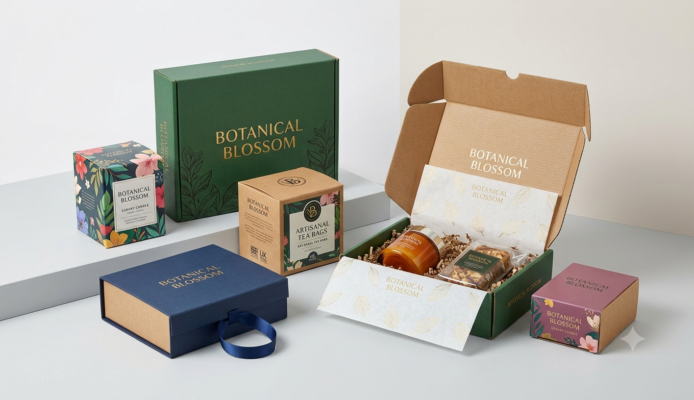
Some packaging is not just a container. It is part of the presentation: a corporate gift, a product sample sent to a buyer, a launch kit for influencers, or a luxury item where the unboxing is the experience. Presentation boxes are designed for exactly these moments.
What makes a good presentation box:
- A strong closure: magnetic closures, ribbon pulls and hinged lids create a satisfying opening.
- A tailored insert: each item sits in its own place, so the contents look deliberate rather than loose.
- A considered finish: foil, embossing and soft-touch lamination signal quality, but two or three well-chosen finishes usually look better than every option at once.
- An interior that is not blank: a printed lining or a short brand message turns opening the box into a branded moment.
For gifting more broadly, you can also explore our gift boxes. If you are testing a new product or sending samples, a single sample before a larger order is a low-risk way to check fit, finish and feel.

Food Packaging: Branding Meets Practical Requirements
Food packaging has to do more than look good. It needs to suit the product, keep it fresh, resist grease or moisture where relevant, and handle the realities of delivery or display. At the same time, it is one of the strongest branding opportunities a food business has, because customers see it every time they eat.
When choosing custom food packaging, consider:
- Type of food: hot, cold, greasy, dry, delicate or stackable. Each has different material needs.
- Format: boxes, trays, sleeves, wrappers and bags can all work together as a system.
- Print: a simple one or two-colour design on kraft can look excellent and keep costs sensible.
- Sustainability: many food brands now prefer recyclable or paper-based packaging. Ask about options when you request a quote.
- Food-safety requirements: always confirm that materials and coatings are appropriate for direct or indirect food contact for your specific product.
Small food businesses benefit from low-minimum ordering, because you can test a design before committing to larger volumes. As your range grows, consistent packaging across products helps customers recognise you on the shelf, at a market stall or in a delivery bag.

Plastic Bottles: Packaging for Liquids, Skincare and Supplements
Bottles are packaging too, and for liquids, creams, oils and supplements they are often the main packaging customers see. If you are looking for a plastic bottle manufacturer in the UK, here is what to think through before you order.
- Product compatibility: some formulations react with certain plastics. Confirm the material suits your liquid.
- Closure type: screw caps, pumps, sprays and droppers each suit different products and customers.
- Size range: choose sizes that match how your product is used and sold, from travel sizes to refills.
- Branding: labels, sleeves and printed bottles all give different looks and price points.
- Outer packaging: a bottle often needs a box, sleeve or insert for protection and retail presentation, which is where matching boxes come in.
Pairing the right bottle with a well-fitted outer box gives you a complete, consistent product, and helps the bottle survive shipping.

Kraft and Eco-Friendly Packaging: For Brands That Want a Natural Look
Kraft board gives packaging a natural, uncoated look that suits artisan food, skincare, candles, apparel and any brand built around sustainability. It prints well in one or two colours, which keeps costs sensible, and it pairs nicely with foil or a simple sticker for a modern-rustic finish. If this fits your brand, explore our kraft boxes.
Things to consider before you choose kraft:
- Strength: kraft comes in folding and corrugated forms, so match the board to the weight of the product.
- Print: natural brown shows colour differently from white board, so ask for a proof before production.
- Inserts and extras: paper-based inserts and recyclable materials keep the whole pack consistent.
- Claims: only describe packaging as recyclable or sustainable if your manufacturer can confirm the materials.
Kraft works especially well alongside food, candle and gift ranges, where a natural look supports the product story.

Christmas Packaging: Plan Early or Pay for It Later
Christmas is the busiest period for packaging, and the most unforgiving. Production queues fill up, delivery slots tighten, and a delay of even a few days can mean missing the season entirely. The fix is simple: plan backwards from the date you need stock in hand.
For most custom orders, you need to allow for design approval, a sample if you want one, bulk production of around 15–18 working days, and delivery. That means seasonal orders should be started as early as possible, not once the festive rush has begun.
Two routes work well for seasonal brands:
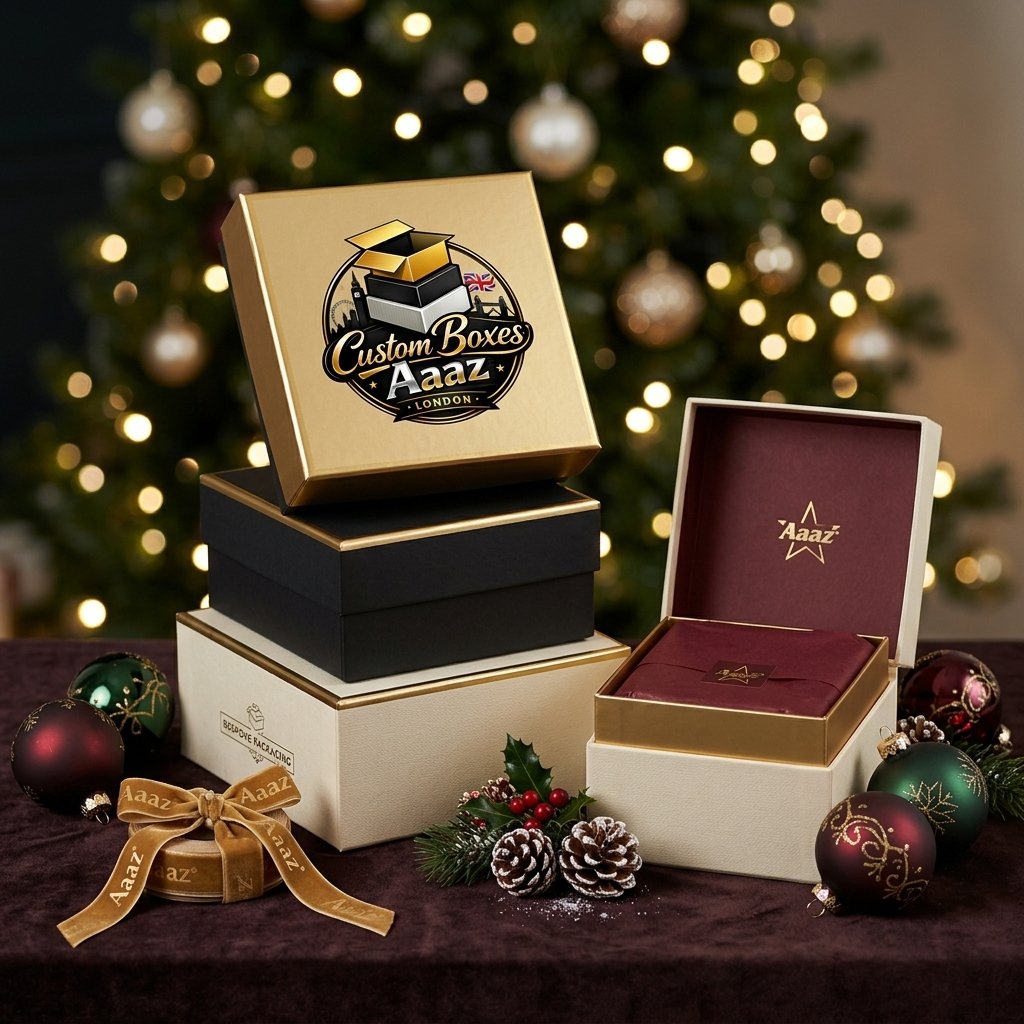
- Printed Christmas packaging: our Christmas boxes are designed for seasonal ranges, limited editions and festive product launches, with print and finishes you can tailor to your brand.
- Bulk gift packaging: if you are producing hampers, corporate gifts or large seasonal runs, Christmas gift boxes wholesale gives you the quantity and consistency to pack at scale.
Whichever you choose, think about the whole experience: the box, the insert, a printed message, and how the packed gift will be stored and shipped before it reaches the recipient.
How to Choose a Packaging Manufacturer
The right manufacturer makes everything easier. Before you commit, check:
- Do they manufacture, or only resell? Working with a manufacturer gives more control over size, material, print and cost.
- Is there a minimum order? A strict high MOQ can tie up cash. Flexible quantities let you test and grow.
- Is design support included? Free design help saves time and avoids costly artwork mistakes.
- Do they offer samples and proofs? A flat view, 3D mock-up or physical sample catches problems before production.
- Is the timeline clear? Ask for the production time and what it includes.
- How does payment work? Look for a structure that protects you, for example paying part upfront and the balance after you have seen the finished order.
- Can they cover your whole range? One supplier for boxes, bottles, labels and seasonal packaging keeps your branding consistent.
You can see the full range of what we make on our homepage, or ask for advice directly through the free quote form.
How Ordering Custom Packaging With Us Works
We keep the process simple and low-risk.
- Send your brief: product, dimensions, quantity and any branding. Free design support is included.
- Review your quote and design: we confirm structure, material, print and finish, and prepare a mock-up.
- Approve a sample if you want one: you check fit, finish and feel in your hands.
- Pay 50% upfront and production begins.
- Approve a video of your finished order, pay the remaining 50%, and we deliver free of charge.
You approve the design, then see the finished order, before the second payment is due.
Common Packaging Mistakes to Avoid
- Ordering before measuring properly. Always measure the product, plus anything that goes inside with it.
- Choosing the cheapest option without checking the finish. A low price is not good value if the box damages the product or looks cheap.
- Overloading the design. Too many finishes can look cluttered. Choose two or three that work together.
- Ignoring shipping. A beautiful box that arrives crushed costs more than a simpler box that arrives intact.
- Leaving seasonal orders too late. Production and delivery take time, so order early.
- Forgetting the inside. A printed interior or insert often adds more impact than another exterior effect.
- Skipping the sample. For new products or complex structures, a sample is cheap insurance.
Quick Comparison: Which Packaging Fits Which Need?
| Need | Best option | Main benefit |
|---|---|---|
| Selling online and shipping parcels | E-commerce packaging boxes | Protection and lower shipping waste |
| Unusual product or premium brand | Bespoke boxes | Exact fit and full customisation |
| Gifts, samples and launches | Presentation boxes | Strong first impression |
| Food products | Custom food packaging | Branding plus practical suitability |
| Liquids, skincare, supplements | Plastic bottles and outer boxes | Complete, protected product |
| Natural look or eco-minded brand | Kraft packaging | Natural finish at a sensible cost |
| Seasonal ranges and hampers | Christmas boxes and wholesale gift boxes | Festive branding at scale |
Sustainability matters across all of these. If it is important to your customers, ask about recycled materials and options such as kraft boxes when you request a quote.
Custom Packaging FAQs
Cost, Quantity and Budget
How much does custom packaging cost in the UK?
It depends on the type, size, material, print, finishes, inserts and quantity. A simple one-colour kraft box costs far less than a rigid magnetic box with foil and a custom insert. The most accurate way to get a price is to send your dimensions and quantity through the free quote form. If you have a budget, share it and we will suggest what works within it.
Is there a minimum order quantity?
There is no strict MOQ. You can order the quantity your business needs, whether you are testing a new product or placing a larger bulk order. Unit prices usually improve as quantity grows.
Is delivery and design included?
Yes. Free design support and free delivery are included on your order.
Design, Materials and Samples
Can I get packaging in a custom size?
Yes. We manufacture to your exact measurements. Give us the product dimensions and anything else that goes in the box, and we will calculate the right internal size.
Can I order a sample first?
Yes. A sample lets you check size, finish and feel before you commit to bulk production, which is especially useful for new products and premium structures.
What materials do you offer?
We work with rigid board, folding carton, E-flute corrugated and kraft, along with a range of print options and finishes such as matte or gloss lamination, soft-touch, spot UV, foil stamping and embossing.
Can you help if I do not have artwork?
Yes. Free design support is included, so you can start with a logo and a rough idea.
Production, Payment and Timing
How long does production take?
Bulk production takes around 15–18 working days, plus time for design and sample approval. For seasonal or event deadlines, tell us your date when you request a quote so we can plan around it.
How does payment work?
You pay 50% upfront to start production. When the order is finished, we send you a video of it. After you approve, you pay the remaining 50% and we arrange delivery.
When should I order Christmas packaging?
As early as you can. With design approval, production and delivery to allow for, seasonal orders can get tight quickly, so start before the festive rush rather than during it.
Choosing the Right Packaging
What is the difference between bespoke boxes and standard boxes?
Standard boxes come in fixed sizes and limited designs. Bespoke boxes are built around your product and brand, with custom dimensions, structure, print, finishes and inserts.
Which packaging is best for an online shop?
A well-fitted corrugated or mailer-style box that protects the product, limits wasted space and offers a branded unboxing is usually the best starting point. See our e-commerce packaging range for options.
Can you supply bottles and boxes together?
Yes. Many customers pair plastic bottles with matching outer boxes or sleeves so the product looks consistent and is better protected in transit.
Ready to Choose Your Packaging?
Whether you need e-commerce boxes, bespoke structures, presentation boxes, food packaging, bottles or Christmas packaging, we can help you plan it around your product, budget and timeline.
Get a Free Quote or explore our full range of custom packaging boxes.
