
Industry Insights
Standard Shoe Box Size Guide UK for Retail, Storage, and Custom Packaging
May
Shoe boxes may look simple, but their size plays a huge role in product protection, retail presentation, shipping costs, and customer experience. Whether you run a footwear brand, an online shop, or a retail business in the UK, understanding standard shoe box dimensions can help you choose better packaging solutions and avoid unnecessary storage or delivery issues.
At custom boxes UK, businesses often look for packaging that not only fits shoes properly but also improves branding and customer satisfaction. The right shoe box size can make your products look more premium while keeping them safe during transport.
This guide explains standard shoe box sizes in the UK, common dimensions for different footwear categories, packaging materials, storage tips, and how bespoke packaging can help your business stand out.
Why Standard Shoe Box Size Matters
A shoe box is more than just a container. It protects the product, supports branding, improves shelf display, and affects shipping efficiency.
Using the wrong shoe box size can lead to:
- Damaged footwear during shipping
- Increased courier costs
- Wasted storage space
- Poor customer experience
- Weak product presentation
For retail brands and eCommerce businesses, packaging has become part of the product experience itself. This is why many businesses now invest in bespoke packaging UK solutions tailored to their products.
What Is the Standard Shoe Box Size in the UK?
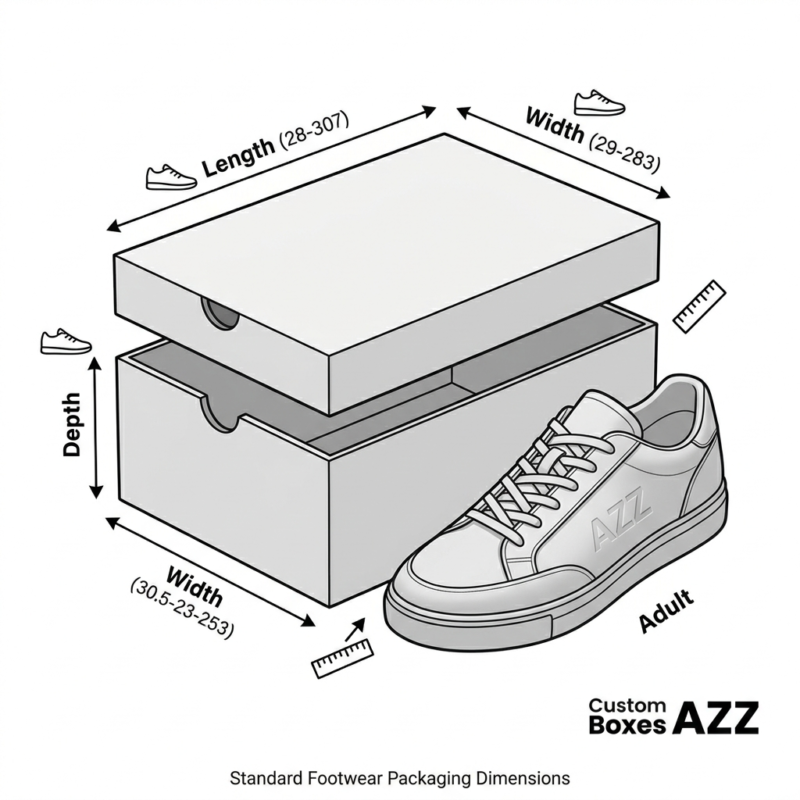
There is no single universal shoe box size because footwear styles vary. Trainers, heels, boots, sandals, and children’s shoes all require different packaging dimensions.
Still, most UK shoe boxes follow common size ranges.
Average Standard Shoe Box Dimensions
| Shoe Type | Average Box Dimensions (L x W x H) |
|---|---|
| Men’s Shoes | 33 x 20 x 12 cm |
| Women’s Shoes | 30 x 18 x 10 cm |
| Children’s Shoes | 22 x 15 x 8 cm |
| Running Trainers | 35 x 22 x 13 cm |
| Boots | 40 x 30 x 15 cm |
These dimensions can vary slightly depending on the brand and packaging style.
Retailers using custom packaging boxes UK often modify these dimensions to improve branding, stacking efficiency, or product protection.
Shoe Box Sizes by Footwear Category
Different shoe categories need different packaging structures. A slim high heel requires far less depth than a pair of hiking boots.
Men’s Shoe Box Sizes
Men’s footwear usually requires larger packaging because of broader shoe dimensions.
Typical sizes include:
| UK Men’s Shoe Size | Standard Box Dimensions |
|---|---|
| UK 6–8 | 32 x 19 x 11 cm |
| UK 9–10 | 34 x 21 x 12 cm |
| UK 11–13 | 36 x 24 x 13 cm |
Sports trainers often need slightly larger boxes due to thicker soles and added accessories.
Women’s Shoe Box Sizes
Women’s shoe packaging varies significantly depending on the footwear style.
| Footwear Style | Typical Box Size |
|---|---|
| Flats | 28 x 17 x 9 cm |
| Heels | 30 x 18 x 10 cm |
| Trainers | 32 x 20 x 12 cm |
| Ankle Boots | 35 x 24 x 13 cm |
Luxury fashion retailers frequently use luxury gift boxes UK to enhance presentation for premium footwear collections.
Children’s Shoe Box Sizes
Children’s shoe boxes are smaller and lighter, making them ideal for compact retail shelving.
| Child Shoe Category | Box Dimensions |
|---|---|
| Infant Shoes | 18 x 10 x 7 cm |
| Toddler Shoes | 20 x 13 x 8 cm |
| Junior Trainers | 25 x 16 x 9 cm |
Smaller boxes also help reduce shipping costs for online retailers.
Common Shoe Box Materials Used in the UK
The packaging material affects durability, appearance, sustainability, and shipping protection.
Most footwear brands in the UK use corrugated cardboard or rigid cardboard packaging.
Packaging Material Comparison
| Material | Strength | Appearance | Best For |
|---|---|---|---|
| Corrugated Cardboard | High | Basic | Shipping & eCommerce |
| Rigid Cardboard | Premium | Luxury | High-end footwear |
| Kraft Cardboard | Medium | Eco-friendly | Sustainable brands |
| Laminated Boxes | High | Glossy finish | Retail display |
Many retailers now prefer corrugated packaging UK because it balances durability and cost-effectiveness.
Why Corrugated Shoe Boxes Are Popular
Corrugated packaging has become the preferred option for footwear shipping because it offers excellent protection without excessive weight.
Benefits include:
- Strong product protection
- Better stacking during transport
- Lightweight structure
- Cost-effective shipping
- Eco-friendly recycling options
Brands looking for durable corrugated boxes UK often customise thickness levels depending on shoe weight and delivery distance.
Shoe Box Thickness and Strength Guide
Not all cardboard is the same. Shoe boxes use different flute grades and board thicknesses.
| Box Type | Thickness | Recommended Use |
|---|---|---|
| Single Wall Corrugated | 3 mm | Lightweight shoes |
| Double Wall Corrugated | 5–7 mm | Heavy boots |
| Rigid Board | 1.5–3 mm | Luxury retail packaging |
| Kraft Board | 2–4 mm | Eco packaging |
If you run an online footwear store, investing in protective packaging helps reduce returns caused by damaged products.
Custom Shoe Boxes for UK Businesses
Standard shoe box sizes work well for general retail, but custom packaging offers much more flexibility.
Many businesses now use custom packaging boxes UK solutions to:
- Improve branding
- Create memorable unboxing experiences
- Add product information
- Increase shelf appeal
- Improve customer loyalty
Custom shoe packaging can include:
- Printed logos
- Matte or gloss finishes
- Magnetic closures
- Embossing
- Foil stamping
- Custom inserts
For premium retailers, custom gift packaging UK adds extra value to the customer experience.
How Shoe Box Dimensions Affect Shipping Costs
Shipping companies calculate charges using both weight and dimensions.
Oversized packaging can increase:
- Courier charges
- Warehouse costs
- Void fill requirements
- Environmental impact
Using properly sized custom shipping boxes UK helps businesses optimise shipping expenses.
Example of Dimensional Impact
| Box Size | Courier Cost Impact |
|---|---|
| Compact Box | Lower |
| Oversized Box | Higher |
| Lightweight Corrugated | Cost-efficient |
| Heavy Rigid Box | Premium shipping rates |
This is especially important for eCommerce footwear businesses handling large order volumes.
Storage Benefits of Standard Shoe Box Sizes
Retailers and homeowners both benefit from standardised shoe box dimensions.
Consistent box sizing allows:
- Easier shelf organisation
- Better warehouse stacking
- Improved inventory management
- Reduced storage waste
Many retailers choose bespoke packaging UK with stack-friendly dimensions for efficient warehouse use.
Luxury Shoe Packaging Trends in the UK
Luxury footwear brands have changed how consumers view packaging. Customers now expect packaging that feels premium and gift-worthy.
Popular luxury shoe packaging features include:
- Magnetic closure boxes
- Textured cardboard
- Soft-touch lamination
- Ribbon closures
- Minimalist branding
- Recyclable premium materials
Many fashion retailers combine footwear packaging with luxury gifting packaging UK to improve presentation during seasonal sales and gifting periods.
Eco-Friendly Shoe Packaging Options
Sustainability matters more than ever in UK retail packaging.
Businesses are now moving toward:
- Recycled cardboard
- Soy-based inks
- Biodegradable packaging
- Plastic-free inserts
- FSC-certified cardboard
Eco-conscious packaging also improves brand perception among customers.
Using sustainable cardboard UK packaging can help businesses reduce environmental impact while maintaining product protection.
Shoe Packaging for Small Businesses
Small footwear startups often struggle with packaging budgets. The good news is that custom packaging is no longer limited to large brands.
Affordable packaging for small business UK now allows startups to order lower minimum quantities while still achieving professional branding.
Benefits for small businesses include:
- Better brand recognition
- Professional appearance
- Improved customer trust
- More social media sharing
- Stronger repeat purchases
Custom shoe packaging can help smaller brands compete with established retailers.
Printed Shoe Boxes and Brand Identity
Packaging acts like silent marketing. Customers remember brands with attractive packaging designs.
Printed shoe boxes can include:
- Brand colours
- QR codes
- Care instructions
- Social media handles
- Product details
Retail businesses in cities such as London often invest heavily in custom boxes London to create stronger retail visibility.
Request a Quote
Best Printing Methods for Shoe Boxes
Different printing methods suit different budgets and finishes.
| Printing Method | Best For | Finish Quality |
|---|---|---|
| Digital Printing | Small orders | High |
| Offset Printing | Bulk production | Premium |
| Flexographic Printing | Corrugated boxes | Cost-effective |
| Screen Printing | Specialty designs | Bold colours |
Luxury footwear brands often combine premium printing with rigid box packaging for maximum visual appeal.
Shoe Box Design Tips for Retailers
A good shoe box should balance practicality and branding.
Important design considerations:
- Easy opening and closing
- Stackable dimensions
- Strong structure
- Attractive printing
- Eco-friendly materials
- Moisture resistance
If your brand focuses on gifting, adding features from designer gift boxes UK can elevate product presentation significantly.
Custom Inserts for Shoe Packaging
Internal inserts improve protection and presentation.
Popular insert options include:
- Cardboard dividers
- Tissue paper wraps
- Foam supports
- Recycled paper inserts
Luxury footwear brands frequently use custom inserts inside luxurious gift boxes UK for premium unboxing experiences.
Retail vs eCommerce Shoe Box Requirements
Retail packaging and shipping packaging are not always the same.
Retail Packaging
Focuses on:
- Appearance
- Branding
- Shelf presentation
eCommerce Packaging
Focuses on:
- Durability
- Lightweight shipping
- Protection during transit
Many UK businesses combine both by using branded corrugated boxes that look attractive while still offering shipping protection.
Seasonal Shoe Packaging Trends
Retail packaging changes throughout the year.
During Christmas and gifting seasons, businesses often switch to:
- Festive colours
- Ribbon closures
- Premium printed finishes
- Gift-ready packaging
Retailers using gift box wholesale UK solutions can reduce packaging costs during seasonal demand spikes.
The Role of Packaging in Customer Experience
Customers notice packaging immediately. A damaged or poorly designed shoe box can negatively affect how they view your brand.
Good packaging improves:
- Customer satisfaction
- Product protection
- Brand reputation
- Social media sharing
- Repeat sales
Premium packaging has become especially valuable for online retailers competing in crowded markets.
Shoe Boxes for Luxury and Designer Footwear
Designer footwear brands often use rigid packaging with luxury finishes.
Common features include:
- Thick cardboard construction
- Magnetic lids
- Spot UV printing
- Embossed logos
- Velvet inserts
Luxury retailers frequently combine footwear presentation with branded gift boxes UK for a more exclusive customer experience.
Bulk Shoe Box Ordering for Retailers
Buying packaging in bulk can reduce overall costs for retailers and wholesalers.
Benefits include:
- Lower per-unit pricing
- Consistent branding
- Easier inventory planning
- Faster packaging availability
Retailers operating across cities often use suppliers offering custom packaging London UK and nationwide delivery support.
How CustomBoxes Azz Supports UK Packaging Needs
CustomBoxes Azz provides packaging solutions tailored for modern UK businesses. From standard shoe box dimensions to premium bespoke packaging, brands can customise materials, finishes, sizes, and printing styles based on their needs.
Whether you need eco-friendly corrugated packaging, retail-ready luxury boxes, or affordable shipping solutions, the right packaging can transform how customers perceive your products.
Businesses looking for professional custom packaging boxes UK solutions often focus on balancing durability, branding, and sustainability — all of which are essential in today’s competitive retail market.
Choosing the Right Shoe Box Size for Your Brand
The best shoe box size depends on several factors:
- Footwear dimensions
- Shipping requirements
- Branding goals
- Storage limitations
- Retail display preferences
If your products vary significantly, custom sizing may help reduce wasted packaging space and improve shipping efficiency.
Brands investing in custom boxes UK often achieve better customer presentation while reducing packaging-related costs over time.
1. What is the standard shoe box size in the UK?
There isn’t one fixed size that every brand follows, because shoes vary a lot in shape and style. However, most standard shoe boxes in the UK fall within a general range. Men’s shoe boxes are usually around 33 x 20 x 12 cm, women’s boxes are slightly smaller at about 30 x 18 x 10 cm, and children’s boxes can be as small as 22 x 15 x 8 cm. Trainers and boots often need bigger packaging because of bulkier shapes.
If you’re running a footwear brand, you’ll notice that sticking to “standard” sizes only works for basic inventory. Many businesses switch to custom boxes UK so they can adjust dimensions based on product type. This helps avoid wasted space, reduces shipping costs, and improves presentation. It also makes storage easier because everything stacks more neatly in warehouses or retail spaces.
2. Why do shoe box sizes vary between brands?
Shoe box sizes vary because every brand designs footwear differently. Some brands focus on slim, lightweight designs, while others create chunkier trainers or heavily cushioned boots. That means a single standard box would not work efficiently for all products. Even something as simple as a thicker sole can increase the required box height.
Brands also think about branding and customer experience. Luxury labels often use larger, more structured packaging to create a premium feel. Many UK retailers rely on bespoke packaging UK so they can control not just size but also design, finish, and unboxing experience. This flexibility helps businesses match packaging with their identity instead of forcing every product into a generic box.
3. How do I choose the right shoe box size for my business?
Choosing the right shoe box size depends on your product range and how you sell. If you sell online, you need packaging that protects shoes during delivery without being too large. If you sell in retail stores, presentation becomes just as important as protection. A good starting point is measuring your largest product and adding enough space for protective wrapping or inserts.
Many UK businesses prefer switching to custom packaging boxes UK because it removes guesswork. You can design boxes that fit each product category perfectly instead of using one-size-fits-all packaging. This reduces damage during transit, saves courier costs, and makes your brand look more professional. Over time, this also improves customer satisfaction because the packaging feels more intentional and well thought out.
4. What material is best for shoe boxes?
The best material depends on how you use the shoe box. Corrugated cardboard is the most common choice because it is strong, lightweight, and affordable. It works really well for shipping and storage. Rigid cardboard, on the other hand, is used for premium footwear because it feels more luxurious and sturdy.
If your focus is durability and cost control, corrugated packaging is usually the best option. Many retailers use corrugated packaging UK to protect shoes during long-distance shipping. If you want a more premium customer experience, rigid boxes work better, especially for gift-style packaging or high-end footwear collections. The right material choice often depends on whether your priority is protection, branding, or a balance of both.
5. Can custom shoe boxes help reduce shipping costs?
Yes, custom shoe boxes can make a noticeable difference in shipping costs. Courier pricing is often based on both weight and dimensions, so oversized packaging can increase your charges even if the product itself is light. A box that fits properly reduces wasted space and avoids unnecessary dimensional weight fees.
This is one of the main reasons brands move towards custom shipping boxes UK. By tailoring the box size to the exact shoe model, you reduce filler material, improve stacking efficiency, and lower courier costs. It also helps in warehouse storage because more units can fit into the same space. Over time, even small savings per parcel can add up significantly for growing eCommerce businesses.
6. What is the difference between retail and shipping shoe boxes?
Retail shoe boxes are designed mainly for appearance and branding. They sit on shelves, attract attention, and reflect your brand identity. These boxes often include printed logos, colours, and design features that enhance visual appeal. Shipping boxes, however, are focused on protection. They are built to handle handling, stacking, and transport stress.
Many businesses combine both needs by using dual-purpose packaging from custom boxes London. This means the same box can look good in-store but also survive delivery. It saves time and reduces packaging complexity. For eCommerce brands, this balance is important because the customer sees the box as part of the product experience, not just a container.
7. Are eco-friendly shoe boxes available in the UK?
Yes, eco-friendly shoe boxes are widely available and becoming more popular across the UK. Many brands are moving away from plastic-heavy packaging and switching to recyclable cardboard or kraft materials. These options are not only better for the environment but also appeal to modern customers who prefer sustainable products.
Using eco packaging also doesn’t mean you lose quality. You can still have strong, well-designed boxes that protect shoes effectively. Many businesses now choose sustainable cardboard UK packaging solutions that reduce environmental impact while maintaining durability. Eco-friendly packaging can also strengthen your brand image because customers often associate sustainability with responsibility and trustworthiness.
8. How does shoe box size affect storage and warehousing?
Shoe box size plays a big role in how efficiently you can store inventory. Larger or inconsistent boxes take up more space and make stacking harder. This can quickly increase storage costs, especially if you manage a large product range. Standardised sizes help keep everything organised and easier to manage.
This is why many retailers use bespoke packaging UK to create uniform packaging across product categories. When boxes stack neatly, you reduce wasted warehouse space and improve picking speed. It also reduces the risk of damage during storage because boxes are less likely to collapse or shift. For growing businesses, efficient storage can make daily operations much smoother.
9. Can shoe boxes be customised for luxury branding?
Yes, shoe boxes can be fully customised to create a luxury feel. This includes premium materials, textured finishes, magnetic closures, foil stamping, and embossed logos. These details help transform a simple shoe box into a high-end packaging experience that feels special to the customer.
Luxury footwear brands often combine design with emotional appeal, especially when targeting gifting markets. That’s why many use luxury gift boxes UK to elevate their presentation. A well-designed luxury shoe box doesn’t just protect the product; it becomes part of the brand identity. It can also increase perceived value, which often supports higher pricing strategies.
10. How can small businesses benefit from custom shoe boxes?
Small businesses benefit from custom shoe boxes because packaging helps them compete with bigger brands. A well-designed box can instantly improve how customers perceive your product, even if your brand is new. It creates trust and makes the unboxing experience more memorable.
Many startups start with affordable options from packaging for small business UK so they can access professional packaging without large order quantities. This allows them to scale gradually while still maintaining strong branding. Custom packaging also helps small businesses stand out on social media, where customers often share unboxing experiences. Over time, this can lead to better brand recognition and repeat sales without heavy marketing costs.
