
Industry Insights
Steps To Seal Mylar Bags With A Cloth Iron: A Complete UK Packaging Guide
May
Mylar bags have become one of the most trusted packaging solutions for storing food, cosmetics, supplements, electronics, and retail products. If you run a small business or simply want better storage at home, learning how to seal Mylar bags properly can save you money and protect your products for longer.
One of the easiest methods is using a standard cloth iron. You do not need expensive industrial equipment to create an airtight seal. With the right process, a household iron can deliver strong and reliable results.
At the same time, businesses across the UK are now combining Mylar packaging with branded solutions like custom boxes UK and premium outer packaging to improve product presentation and customer experience.
This guide explains everything you need to know about sealing Mylar bags with a cloth iron, including preparation, temperature settings, common mistakes, storage tips, and how businesses can combine Mylar packaging with modern retail packaging trends.
What Are Mylar Bags?
Mylar bags are durable storage pouches made from stretched polyethylene terephthalate (PET). They are designed to protect contents from:
- Moisture
- Air
- Light
- Odours
- Contamination
These bags are widely used in food storage, pharmaceuticals, cosmetics, coffee packaging, electronics, and emergency supplies.
Many UK businesses pair Mylar pouches with custom packaging boxes UK to create a professional retail-ready appearance.
Common Uses of Mylar Bags
| Industry | Common Products Stored |
|---|---|
| Food | Coffee, rice, spices, snacks |
| Cosmetics | Powders, masks, skincare samples |
| Supplements | Protein powder, capsules |
| Electronics | Components sensitive to moisture |
| Retail | Small premium products |
Why Use A Cloth Iron To Seal Mylar Bags?
A cloth iron is affordable, accessible, and surprisingly effective for small-scale sealing.
You may not need a commercial heat sealer if you:
- Seal products occasionally
- Run a home business
- Prepare emergency food storage
- Package handmade items
- Test packaging before mass production
For startups using custom packaging for small business UK, a cloth iron offers a low-cost packaging solution during the early stages.
Tools You Need Before Sealing
Before you start, gather the right materials.
Essential Equipment
| Tool | Purpose |
|---|---|
| Cloth iron | Creates heat seal |
| Mylar bags | Packaging material |
| Flat wooden board | Stable heat-resistant surface |
| Baking paper or cloth | Prevents direct burning |
| Oxygen absorbers | Extends shelf life |
| Clips or ruler | Helps create straight seal |
You can also use premium storage packaging alongside bespoke packaging UK for retail presentation.
Choosing The Right Mylar Bag Thickness
Not all Mylar bags perform the same way. Thickness matters because it affects durability and sealing quality.
Mylar Thickness Guide
| Thickness | Best Use | Durability |
|---|---|---|
| 3.5 mil | Lightweight storage | Moderate |
| 5 mil | Food storage | Strong |
| 7 mil | Long-term storage | Very strong |
| 10 mil | Heavy-duty industrial use | Maximum |
For home use and small businesses, 5 mil bags are usually the best balance between flexibility and protection.
Request a Quote
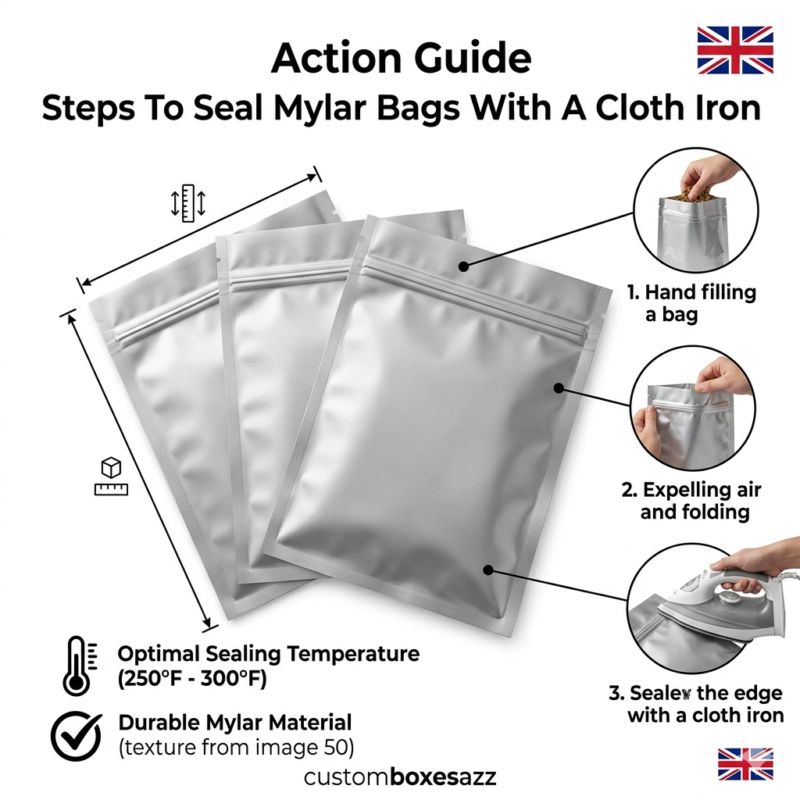
Step-By-Step Guide To Seal Mylar Bags With A Cloth Iron
Step 1: Fill The Mylar Bag Properly
Do not overfill the bag. Leave at least 2–3 inches at the top for sealing.
Overstuffed bags create weak seals and increase the chance of air leaks.
If you are storing food items, add oxygen absorbers before sealing.
Step 2: Remove Excess Air
Press out as much air as possible before applying heat.
You can:
- Press manually
- Use a straw method
- Slightly flatten the bag
- Use vacuum assistance for better results
Less trapped air means longer shelf life.
Step 3: Prepare The Iron
Set your cloth iron to a medium-high heat setting.
Avoid steam mode.
Recommended Temperature Settings
| Iron Setting | Suitable For |
|---|---|
| Medium | Thin Mylar bags |
| Medium-high | Standard 5 mil bags |
| High | Thick industrial Mylar |
Always test on a spare section first.
Step 4: Place The Bag On A Flat Surface
Use:
- Wooden cutting board
- Smooth tabletop
- Heat-resistant board
Avoid soft or uneven surfaces because they can create weak seals.
Step 5: Cover With Baking Paper
Place baking paper or thin cotton cloth over the sealing edge.
This helps prevent:
- Burning
- Melting
- Iron damage
- Uneven pressure
Step 6: Apply The Iron Slowly
Press the iron firmly across the top edge for 3–5 seconds.
Move slowly in a straight line.
You should notice:
- A smooth sealed strip
- No wrinkles
- No gaps
Some people prefer sealing almost the entire top while leaving a tiny opening for final air removal before sealing completely.
Step 7: Inspect The Seal
After cooling for a few seconds, gently pull both sides.
A strong seal should:
- Stay airtight
- Look smooth
- Have no visible openings
- Resist pulling
If the seal opens easily, repeat the process with slightly more heat.
Common Mistakes When Sealing Mylar Bags
A lot of sealing problems happen because of small errors.
Mistakes To Avoid
Using Steam Mode
Steam introduces moisture into the bag and weakens storage quality.
Overheating The Bag
Too much heat can:
- Burn the edges
- Melt holes
- Damage contents
Uneven Pressure
A rushed seal often creates air leaks.
Dirty Sealing Area
Food particles or powder near the opening stop proper sealing.
How To Test If Your Mylar Bag Is Airtight
After sealing, perform a quick inspection.
Airtight Testing Methods
| Method | What To Check |
|---|---|
| Manual pressure | Air escaping |
| Visual inspection | Gaps or wrinkles |
| Light squeeze | Weak spots |
| Overnight test | Bag inflation |
If the bag inflates later, the seal likely failed.
Benefits Of Properly Sealed Mylar Bags
Correct sealing offers several advantages.
Product Protection
Mylar blocks:
- UV rays
- Moisture
- Oxygen
- Dust
Longer Shelf Life
Food products can last significantly longer when stored properly.
Professional Packaging Appearance
Retail businesses often combine sealed pouches with luxury gift boxes UK to create a premium customer experience.
Better Shipping Protection
When used together with protective packaging UK, Mylar bags reduce product damage during delivery.
Mylar Bags For Small Businesses In The UK
Small businesses across the UK now use Mylar bags for:
- Handmade products
- Herbal products
- Coffee packaging
- Cosmetic samples
- Artisan foods
The packaging market has shifted toward branding and presentation. Plain storage bags are often placed inside custom packaging boxes UK to improve shelf appeal.
Businesses in cities like London and Glasgow increasingly use branded packaging for customer retention and online sales.
You can see growing demand for:
Can A Cloth Iron Replace A Heat Sealer?
For many users, yes.
But there are limitations.
Cloth Iron Vs Heat Sealer
| Feature | Cloth Iron | Heat Sealer |
|---|---|---|
| Cost | Low | Higher |
| Ease of use | Moderate | Easy |
| Speed | Slower | Faster |
| Seal consistency | Medium | High |
| Best for | Home & small batches | Commercial production |
If you seal large volumes daily, investing in commercial sealing equipment becomes worthwhile.
Best Products To Store In Mylar Bags
Not every product requires Mylar storage, but many benefit from it.
Ideal Products
- Rice
- Pasta
- Coffee beans
- Dried fruits
- Protein powder
- Tea
- Electronics
- Medical supplies
Many UK retailers combine these with custom gift packaging UK for subscription boxes and premium gift sets.
Storage Tips After Sealing
Proper sealing is only part of the process.
Best Storage Conditions
| Storage Factor | Recommendation |
|---|---|
| Temperature | Cool and dry |
| Light exposure | Minimal |
| Humidity | Low |
| Stacking | Avoid crushing |
Store bags inside rigid packaging where possible for additional protection.
This is why many businesses use bespoke packaging UK alongside Mylar storage.
How UK Brands Use Mylar Packaging Creatively
Packaging has become part of the buying experience.
Modern brands use Mylar bags with:
- Matte finishes
- Metallic printing
- Transparent windows
- Zip-lock features
- Foil stamping
Then they combine them with branded outer packaging from providers offering custom boxes UK solutions.
This layered packaging approach:
- Improves presentation
- Protects products
- Builds brand identity
- Increases customer trust
Eco-Friendly Packaging Considerations
Many businesses now want sustainable packaging options.
While Mylar itself is not always recyclable through standard household systems, brands can still reduce waste by:
- Using reusable pouches
- Choosing minimal packaging
- Pairing with recyclable cardboard packaging
- Reducing oversized boxes
Some businesses combine Mylar bags with recyclable custom packaging boxes UK to create more balanced packaging systems.
When Should You Upgrade To Professional Packaging?
If your business is growing, your packaging should grow too.
Signs You Need Better Packaging
- Increased order volume
- More online sales
- Retail shelf placement
- Brand awareness goals
- Higher-value products
Professional packaging helps products stand out in competitive UK markets.
Businesses often move from plain storage solutions to:
- custom boxes London
- Printed mailer boxes
- Branded inserts
- Premium rigid packaging
- Protective transit packaging
Tips For Achieving A Perfect Seal Every Time
Consistency matters.
Quick Expert Tips
- Always pre-test heat settings
- Keep sealing edges clean
- Work on a hard surface
- Seal slowly and evenly
- Avoid wrinkles
- Leave enough top space
- Double-seal valuable products
These simple habits improve both appearance and durability.
Why Packaging Presentation Matters In The UK Market
UK customers now expect packaging to feel professional, secure, and attractive.
Even if your product quality is excellent, poor packaging can reduce trust.
That is why businesses combine functional storage with:
- branded boxes
- protective inserts
- luxury finishes
- custom labels
- eco-conscious materials
Working with providers offering custom packaging boxes London solutions can help small brands compete with larger retailers.
Final Thoughts On Sealing Mylar Bags With A Cloth Iron
Sealing Mylar bags with a cloth iron is simple, affordable, and effective when done properly. You do not need expensive machinery to create airtight packaging at home or for a small business.
The key is using:
- the right heat setting
- proper pressure
- clean sealing edges
- quality Mylar bags
Once sealed correctly, your products gain better protection against moisture, oxygen, and contamination.
For businesses across the UK, combining Mylar packaging with branded solutions like custom boxes UK and premium retail packaging creates a stronger customer experience while improving product safety and presentation.
Whether you are storing food, shipping handmade products, or building a growing eCommerce brand, proper packaging makes a noticeable difference.
FAQs
1. Can I use any cloth iron to seal Mylar bags?
You can use a standard household cloth iron to seal Mylar bags, but it helps to choose one that has adjustable temperature settings. The key is to avoid steam, as moisture can weaken the seal. Start with medium heat for thinner bags and increase slightly for thicker ones. Always test on a spare piece of Mylar first to make sure it doesn’t burn or melt. If you’re planning to package products for your small business, pairing Mylar bags with custom packaging for small business UK can make your products look more professional while keeping them safe.
2. How do I prevent burning the Mylar bag when using an iron?
Burning happens when the iron is too hot or moves too slowly over the bag. To avoid this, always use medium to medium-high heat and cover the sealing edge with baking paper or a thin cotton cloth. Press down firmly, but don’t leave the iron in one spot for too long. A smooth, steady motion gives the best seal without damaging the bag. If you’re packaging for retail, consider using custom boxes London or protective outer packaging to provide extra protection and a premium look.
3. How much air should I remove before sealing a Mylar bag?
You want to remove as much air as possible without squashing the contents. Trapped air can reduce shelf life and cause the seal to fail. Gently press the bag flat, or use a straw to suck out the last bit of air before sealing. For food items, adding oxygen absorbers also helps keep products fresh. Using Mylar bags alongside custom packaging boxes UK gives you the best of both worlds: airtight protection and a polished retail-ready look.
4. Can Mylar bags be reused after opening?
Yes, Mylar bags can be reused, especially if they have a zip-lock or similar resealable feature. If you’re using a heat seal, you’ll need to open it carefully and then use a small iron or clip to reseal the bag. Reusing bags is great for storing bulk products, leftovers, or small items like coffee, snacks, or powders. Pairing reused Mylar bags with luxury gift boxes UK can make them look new again, which is perfect if you’re sending gifts or products to customers.
5. What thickness of Mylar bag is best for home sealing?
For home use, 5 mil Mylar bags are usually the best choice. They’re strong enough to protect your contents but not so thick that they’re hard to seal with a cloth iron. Thinner bags, like 3.5 mil, may be easier to seal but aren’t as durable. Thicker bags, like 7–10 mil, need more heat and steady pressure. For small businesses, combining 5 mil or 7 mil bags with bespoke packaging UK ensures your product is both secure and visually appealing.
6. How long should I press the iron on a Mylar bag?
Generally, 3–5 seconds of firm, steady pressure works well for most bags. The exact time depends on the bag’s thickness and your iron’s heat. Move the iron slowly and evenly to avoid wrinkles or gaps. Always allow the seal to cool for a few seconds before testing it. For businesses using Mylar packaging in retail, sealing your bags carefully and then placing them in custom gift packaging UK adds both protection and presentation value.
7. Can I seal food items safely with a cloth iron?
Yes, cloth iron sealing is safe for food, as long as the Mylar bags are food-grade and you don’t overheat the bag. Make sure to remove excess air and consider adding oxygen absorbers for longer shelf life. Items like coffee, rice, dried fruits, and snacks all do well in sealed Mylar bags. Pairing your sealed food bags with custom packaging for small business UK helps you create professional, branded products for your customers.
8. What’s the easiest way to test if my Mylar bag is airtight?
After sealing, gently press or squeeze the bag. If it holds its shape and no air escapes, the seal is airtight. You can also lightly lift the bag and listen for hissing sounds. Another tip is to leave it overnight and check if it stays compressed. If you’re selling products, combining airtight Mylar bags with custom boxes UK gives your customers confidence that your items are fresh and protected.
9. Is it better to double-seal Mylar bags?
Double-sealing adds extra security, especially for valuable or perishable items. Simply seal once, then move the iron slightly along the top and seal a second time. This reduces the chance of air leaks and makes the bag more durable during shipping. Many UK brands use double-sealed Mylar bags inside custom packaging boxes UK for a professional finish and to ensure products arrive in perfect condition.
10. How can small UK businesses make Mylar bags look premium?
A simple way is to combine Mylar bags with branded outer packaging. For example, placing sealed Mylar pouches inside custom boxes London or luxury gift boxes UK makes them instantly more attractive. Adding labels, stickers, or inserts enhances presentation. Even handmade or small-batch products can feel high-end when the packaging looks polished, giving customers a sense of quality and attention to detail.
