
Industry Insights
What Are Cereal Boxes Made Of? Check Out the Best Materials for Packaging in the UK
May
Walk through any supermarket aisle in the UK and you’ll see shelves packed with colourful cereal boxes. From family-sized cornflakes to premium granola, packaging plays a major role in protecting the product and attracting customers. But have you ever stopped to think about what cereal boxes are actually made of?
If you run a food business, own a cereal brand, or are simply curious about packaging materials, understanding cereal box packaging can help you make smarter decisions. The right material affects product freshness, shelf appeal, sustainability, printing quality, and even shipping costs.
At custom boxes UK, businesses are increasingly looking for durable and eco-friendly cereal packaging that reflects modern customer expectations. Buyers in the UK now care about recyclable materials, premium designs, and safe food packaging more than ever before.
This guide explores the best materials used for cereal boxes, how they work, and which options are ideal for different cereal products.
Why Packaging Material Matters for Cereal Boxes
Cereal packaging does much more than hold food together. It protects the contents from moisture, contamination, crushing, and air exposure. At the same time, it acts as a silent salesperson sitting on the shelf.
Good cereal packaging should:
- Keep cereal fresh for longer
- Protect against damage during transport
- Provide space for branding and nutritional information
- Support sustainable packaging goals
- Create strong shelf appeal
- Be cost-effective for manufacturers
For UK food brands using custom packaging boxes UK, material selection directly affects product quality and customer perception.
The Most Common Materials Used for Cereal Boxes
Several packaging materials are commonly used in the cereal industry. Each one has its own advantages depending on the type of cereal, budget, and branding goals.
Overview of Popular Cereal Box Materials
| Material Type | Common Use | Strength | Eco-Friendly | Printing Quality |
|---|---|---|---|---|
| Paperboard | Standard cereal boxes | Medium | High | Excellent |
| Cardboard | Heavy-duty packaging | High | High | Very Good |
| Corrugated Board | Shipping and bulk packs | Very High | High | Moderate |
| Kraft Paper | Organic and eco cereal brands | Medium | Excellent | Natural Finish |
| Rigid Board | Luxury cereal packaging | Very High | Moderate | Premium |
Paperboard: The Most Common Cereal Box Material
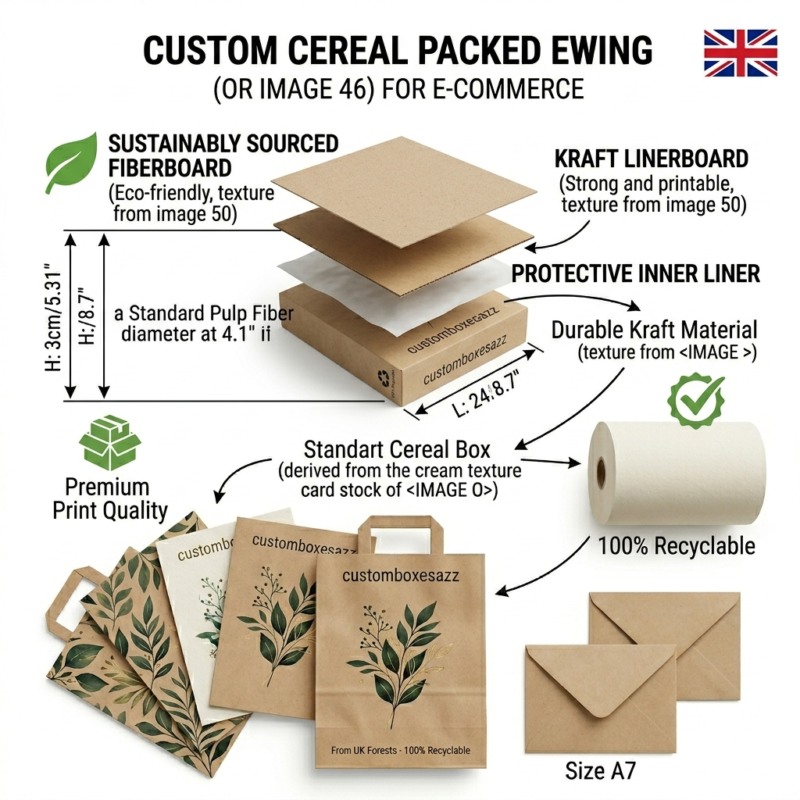
Paperboard is the material most people recognise from traditional cereal boxes. It is lightweight, printable, and highly practical for retail packaging.
Paperboard is usually made from compressed paper fibres. Manufacturers often use recycled materials mixed with virgin fibres to maintain strength and food safety standards.
Why Paperboard Works Well for Cereal Packaging
Paperboard is popular because it offers:
- Smooth printing surfaces
- Lightweight handling
- Affordable production costs
- Recyclability
- Easy folding and shaping
Most breakfast cereal brands in the UK rely on paperboard cartons paired with an inner plastic or foil liner to preserve freshness.
Many companies working with custom boxes London choose paperboard because it allows high-quality graphics and vibrant colours that stand out on supermarket shelves.
Cardboard vs Paperboard: What’s the Difference?
People often use the terms cardboard and paperboard interchangeably, but there are slight differences.
Comparison Between Cardboard and Paperboard
| Feature | Paperboard | Cardboard |
|---|---|---|
| Thickness | Thin to medium | Medium to thick |
| Weight | Lightweight | Heavier |
| Flexibility | High | Moderate |
| Printing Surface | Smooth | Slightly textured |
| Common Use | Retail cereal boxes | Shipping and sturdy packaging |
Paperboard is generally better for retail presentation, while thicker cardboard is useful when extra protection is needed.
Corrugated Board for Bulk Cereal Packaging
Corrugated board is rarely used for the actual cereal box displayed on shelves. Instead, it’s commonly used for transportation packaging.
You’ve probably seen large corrugated cartons holding multiple cereal boxes in warehouses or supermarkets.
Corrugated packaging contains fluted layers between flat sheets, which creates cushioning and durability.
Benefits of Corrugated Packaging
- Excellent crush resistance
- Ideal for shipping long distances
- Protects products during storage
- Recyclable and sustainable
- Suitable for heavy bulk orders
Brands ordering large quantities from custom packaging boxes London often combine retail paperboard cartons with corrugated shipping boxes for complete protection.
Kraft Paper Packaging for Eco-Friendly Cereal Brands
Sustainability has become one of the biggest trends in UK packaging. Consumers actively look for recyclable and environmentally responsible options.
That’s where kraft paper packaging comes in.
Kraft packaging is made using chemical pulp processing that retains natural wood fibres, giving it a brown earthy appearance.
Why Kraft Packaging Is Popular
Organic cereal brands and eco-conscious startups prefer kraft materials because they:
- Look natural and sustainable
- Are biodegradable
- Offer strong tear resistance
- Support eco-friendly branding
- Appeal to environmentally aware customers
Businesses offering organic granola, oats, or healthy breakfast products often use kraft packaging combined with bespoke packaging UK solutions to create a premium natural appearance.
Food Safety in Cereal Packaging
Food safety is one of the most critical factors in cereal box production.
The outer carton alone cannot fully preserve cereal freshness. That’s why cereal packaging usually includes an inner lining or bag.
Common Inner Packaging Materials
| Inner Packaging Material | Purpose |
|---|---|
| Polyethylene (PE) | Moisture barrier |
| Polypropylene (PP) | Freshness protection |
| Foil Laminate | Oxygen barrier |
| Compostable Films | Eco-friendly alternative |
These liners help prevent:
- Moisture damage
- Stale cereal
- Contamination
- Loss of crunchiness
Packaging manufacturers in the UK must follow food-grade packaging regulations to ensure safe storage and transportation.
Why Printing Quality Matters on Cereal Boxes
Cereal boxes compete heavily for attention on retail shelves. Strong packaging design influences buying decisions, especially for children’s cereals and premium products.
The material you choose affects:
- Colour vibrancy
- Ink absorption
- Graphic sharpness
- Surface texture
- Finishing options
Paperboard and coated cardboard usually produce the best print quality for high-resolution branding.
At CustomBoxes Azz, many food brands request glossy coatings, embossing, and custom finishes to create eye-catching cereal packaging that stands out in crowded retail environments.
Sustainable Packaging Trends in the UK
UK consumers are becoming increasingly environmentally conscious. Brands are now under pressure to reduce plastic waste and use recyclable packaging materials.
Sustainable Trends in Cereal Packaging
| Trend | Benefit |
|---|---|
| Recycled paperboard | Reduces waste |
| Soy-based inks | Lower environmental impact |
| Compostable liners | Eco-friendly disposal |
| Minimalist packaging | Reduced material usage |
| FSC-certified materials | Responsible sourcing |
Businesses using custom packaging for small business UK services often prioritise sustainable packaging to improve customer trust and brand loyalty.
Request a Quote
Luxury Cereal Packaging Is Growing in Popularity
Not all cereal packaging is designed for supermarket shelves. Premium breakfast brands, gift hampers, and artisan granola companies are investing in luxury cereal packaging.
Rigid board and premium cardboard materials are commonly used for these products.
Features of Luxury Cereal Packaging
- Magnetic closures
- Textured finishes
- Foil stamping
- Embossed branding
- Premium inserts
Luxury breakfast gift sets are increasingly paired with luxury gift boxes UK to create elegant presentation packaging for seasonal gifting and corporate promotions.
The Role of Protective Packaging During Shipping
Even the best cereal box can fail if it gets crushed during transport.
That’s why outer protective packaging is essential for wholesalers, online stores, and subscription brands.
Common Protective Packaging Options
- Corrugated shipping cartons
- Cushion inserts
- Protective wraps
- Partition dividers
- Edge protectors
Using reliable protective packaging UK solutions helps reduce damaged deliveries and customer complaints.
How Thickness Affects Cereal Packaging Performance
Packaging thickness directly affects durability, cost, and presentation.
Typical Packaging Thickness Guide
| Material | Typical Thickness | Best Use |
|---|---|---|
| Lightweight Paperboard | 250–300 GSM | Standard cereals |
| Medium Cardboard | 350–400 GSM | Premium cereals |
| Corrugated Board | 1–5 mm | Shipping cartons |
| Rigid Board | 800–1500 GSM | Luxury gift packaging |
Choosing the right thickness depends on:
- Product weight
- Shipping distance
- Retail display requirements
- Budget
- Brand positioning
Why Custom Packaging Matters for Cereal Brands
Generic cereal boxes rarely create memorable customer experiences. Custom packaging helps brands differentiate themselves in a crowded market.
Benefits of custom cereal packaging include:
- Better shelf visibility
- Unique branding opportunities
- Improved customer recognition
- Enhanced unboxing experiences
- Greater flexibility in sizing and design
Businesses looking for custom boxes UK packaging solutions often customise:
- Box shapes
- Window cut-outs
- Finishes
- Colours
- Inserts
- Opening styles
Best Materials for Small Cereal Businesses
If you’re launching a small cereal brand, your packaging needs may differ from large manufacturers.
Smaller brands often prefer:
Recommended Packaging Materials for Startups
- Kraft paperboard for eco-friendly brands
- Standard paperboard with inner liners for retail cereals
- Corrugated cartons for shipping small batches
- Rigid or premium cardboard for limited-edition gift cereals
Partnering with custom packaging for small business UK providers allows you to order smaller quantities while still maintaining professional packaging quality.
Frequently Asked Questions
1. What materials are commonly used for cereal boxes in the UK?
Cereal boxes in the UK are typically made from paperboard, cardboard, corrugated board, kraft paper, and sometimes rigid board. Paperboard is the most popular choice because it’s lightweight, printable, and cost-effective, making it ideal for everyday cereal packaging. Cardboard is thicker and stronger, suitable for premium or heavier cereal products. Corrugated board is mainly used for bulk shipping because of its durability and cushioning. Kraft paper is perfect for eco-friendly or organic cereal brands since it’s recyclable and biodegradable. Rigid board is mostly used for luxury cereal packaging or gift sets. If you’re looking for custom cereal packaging, working with custom boxes UK lets you choose the material that fits your brand and protects your product effectively.
2. Why is paperboard the most popular choice for cereal boxes?
Paperboard is popular because it offers a great balance of strength, cost, and design flexibility. It’s lightweight, easy to fold, and works well with high-quality printing, so your cereal branding stands out on shelves. It’s also recyclable, which makes it a sustainable option for environmentally conscious brands. Paperboard can be combined with inner liners made from polyethylene or foil to keep cereal fresh, which is crucial for maintaining taste and crunch. For UK businesses, using custom packaging boxes UK allows you to design paperboard cereal boxes that are both visually appealing and practical for everyday use.
3. Can cereal boxes be made eco-friendly?
Yes, cereal boxes can be made eco-friendly. Many UK brands are now using kraft paper, recycled paperboard, or biodegradable liners to reduce environmental impact. Kraft paper is naturally brown and gives an organic look, which appeals to eco-conscious customers. Recycled paperboard reduces waste while maintaining enough strength for standard packaging. Some brands are also moving toward compostable inner films instead of plastic. By working with bespoke packaging UK, you can design cereal boxes that are not only durable and visually attractive but also align with sustainable practices that your customers care about.
4. How does cardboard differ from paperboard for cereal packaging?
Cardboard is thicker and stronger than paperboard, which makes it better for premium or heavier cereal products that need extra durability. Paperboard is thinner, lightweight, and ideal for standard retail cereal boxes that rely on vibrant printing and easy folding. While both materials can be recycled, cardboard provides better protection during shipping or long-term storage. For businesses in the UK, choosing between custom boxes London and other regional packaging options depends on whether your focus is on strong, durable packaging or light, visually striking retail designs.
5. What role does corrugated board play in cereal packaging?
Corrugated board is mainly used for shipping and bulk storage rather than the retail cereal box itself. It consists of fluted layers sandwiched between flat sheets, creating a strong cushioning effect that protects boxes from crushing and impact. This material is perfect for transporting multiple cereal boxes over long distances, ensuring they arrive intact. UK brands often combine retail paperboard boxes with corrugated shipping cartons to balance presentation and protection. Using protective packaging UK solutions helps prevent damaged products and ensures customer satisfaction.
6. Are cereal boxes recyclable in the UK?
Most cereal boxes in the UK are recyclable, especially if they are made from paperboard or cardboard. The key is to separate the inner plastic or foil liners before recycling. Flattening the box can save space in recycling bins, and checking local council recycling guidelines ensures proper disposal. Some laminated or glossy finishes might require special handling, but standard paperboard boxes are generally accepted. For businesses creating sustainable packaging, custom packaging boxes UK offers options that make your cereal boxes recyclable and environmentally friendly.
7. Can small cereal businesses use custom packaging in the UK?
Absolutely! Small cereal businesses in the UK can use custom packaging to make their products stand out. You don’t need huge production runs to get professionally designed boxes. Options like kraft paper for organic cereals, rigid board for premium products, or coated paperboard for retail-ready packaging are all available. Working with custom packaging for small business UK allows you to choose the material, size, and design without overcommitting to large orders, giving you the flexibility to grow your brand while maintaining a professional look.
8. What types of inner packaging help keep cereal fresh?
Inner packaging is critical for keeping cereal fresh and crunchy. Common options include polyethylene (PE) bags, polypropylene (PP) liners, foil laminates, and compostable films. These materials create a moisture and air barrier that prevents cereal from going stale. Some eco-friendly options also exist, like biodegradable or compostable liners. Choosing the right inner packaging works hand in hand with the outer box to ensure freshness. UK brands often combine these liners with custom boxes London or custom packaging boxes UK solutions to create a complete, safe, and attractive packaging system.
9. How does packaging thickness affect cereal boxes?
Thickness impacts durability, cost, and how premium the box feels. Lightweight paperboard (around 250–300 GSM) works well for standard cereals, while medium cardboard (350–400 GSM) is better for heavier or premium products. Corrugated boards are thicker, making them ideal for shipping cartons, while rigid boards (800–1500 GSM) create a luxurious feel for gift sets. Choosing the right thickness ensures your cereal is protected, looks appealing on the shelf, and aligns with your brand positioning. UK businesses can get advice on ideal thickness and material from custom boxes UK or bespoke packaging UK.
10. Why is custom cereal packaging important for branding?
Custom cereal packaging helps your product stand out, communicates your brand story, and creates a memorable customer experience. Unique shapes, window cut-outs, premium finishes, and vibrant printing can make your cereal more attractive than generic boxes. This matters in a crowded market where shelf appeal can influence buying decisions. Small brands, premium gift cereals, or subscription boxes all benefit from custom boxes UK and custom gift packaging UK solutions to deliver packaging that aligns with their brand image and customer expectations while keeping the product safe and fresh.
