
Industry Insights
What Is Die Cutting?
May
Packaging is one of the first things customers notice about your product. Whether you run an online shop, a bakery, a cosmetics brand, or a retail business, the way your packaging looks and functions can completely change how people view your brand. One of the most widely used techniques behind premium packaging design is die cutting.
If you have ever seen packaging with custom windows, unique shapes, inserts, or perfectly folded edges, there is a strong chance die cutting was involved.
For businesses investing in custom boxes UK solutions, understanding die cutting can help you create packaging that is both visually attractive and practical. From retail boxes and mailer packaging to luxury gift packaging and promotional displays, die cutting plays a major role in modern packaging production.
This guide explains what die cutting is, how it works, the different types of die cutting, materials commonly used, and why businesses across the UK rely on this process for high-quality packaging.
Understanding Die Cutting in Packaging
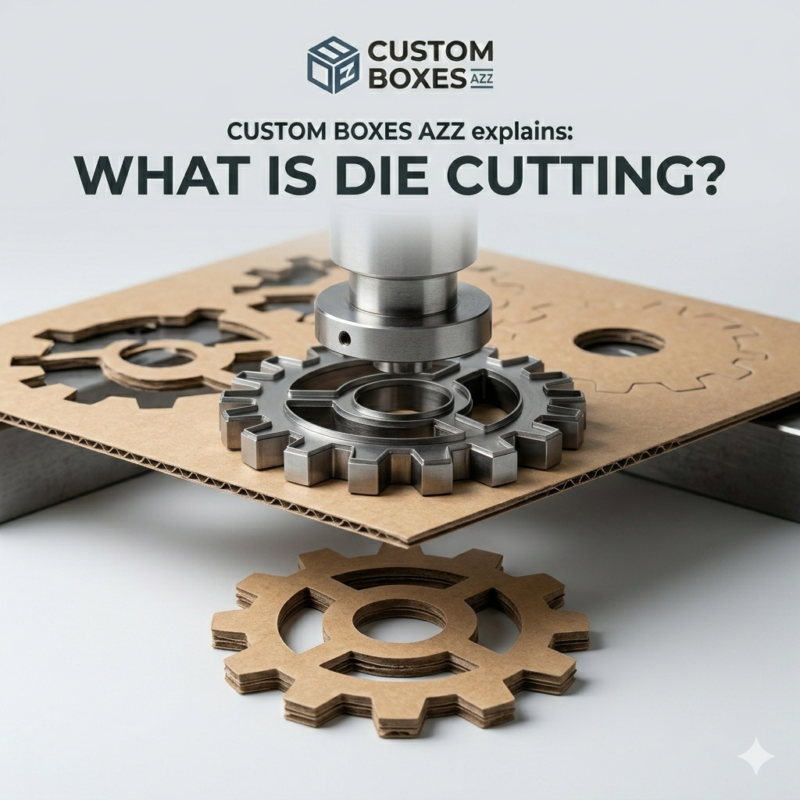
Die cutting is a manufacturing process used to cut, shape, score, or perforate materials into custom designs using a specialised tool called a die.
A die works like a sharp mould or template. It presses into the material to create a precise shape or pattern. In packaging, die cutting is commonly used for:
- Folding cartons
- Custom retail boxes
- Window packaging
- Product inserts
- Labels and stickers
- Protective packaging
- Luxury gift packaging
- Point-of-sale displays
Think of it like a giant cookie cutter for packaging materials.
Instead of manually cutting cardboard or paper, a die-cutting machine produces consistent and accurate shapes at high speed. This makes the process ideal for businesses that need professional-looking packaging in large quantities.
Companies offering custom packaging boxes UK services often use die cutting to create tailored packaging designs that match a brand’s products and identity.
How Die Cutting Works
The die-cutting process is surprisingly simple once you understand the basics.
Step 1: Creating the Die
The first step is producing a custom die based on the packaging design.
The die is usually made from:
- Steel blades
- Wooden boards
- Metal plates
The blades are shaped according to the box template or packaging design.
If you want to learn more about packaging templates, this guide on box templates and packaging design explains how packaging structures are planned before production.
Step 2: Material Placement
The packaging material is placed into the die-cutting machine.
Common materials include:
- Corrugated cardboard
- Kraft paper
- Paperboard
- Rigid board
- Plastic sheets
- Foam inserts
Step 3: Cutting and Scoring
The machine presses the die into the material.
This can:
- Cut shapes
- Create fold lines
- Add perforations
- Make windows
- Produce slots and tabs
Step 4: Folding and Assembly
Once cut, the packaging is folded and assembled into its final shape.
The result is clean, professional packaging ready for printing, branding, and product placement.
Types of Die Cutting Used in Packaging
Different packaging projects require different die-cutting methods.
Here are the most common types used in the UK packaging industry.
| Die Cutting Type | Best For | Key Benefits |
|---|---|---|
| Flatbed Die Cutting | Corrugated boxes and rigid packaging | Strong cutting pressure and precision |
| Rotary Die Cutting | High-volume packaging production | Fast and efficient |
| Digital Die Cutting | Short runs and prototypes | No physical die required |
| Laser Die Cutting | Intricate designs | Highly detailed cuts |
| Steel Rule Die Cutting | Folding cartons and retail packaging | Cost-effective for bulk production |
Businesses searching for custom boxes London solutions often choose the method based on order volume, packaging complexity, and budget.
Why Die Cutting Is Important for Packaging
Die cutting is not only about appearance. It also improves functionality, efficiency, and branding.
Better Product Protection
Die-cut packaging can be designed specifically around your product dimensions.
This helps:
- Reduce movement during shipping
- Improve protection
- Lower the risk of damage
Protective inserts are especially common in electronics, cosmetics, and fragile item packaging.
For businesses shipping delicate products, protective packaging UK solutions often rely heavily on die-cut inserts.
Stronger Brand Identity
Unique packaging shapes instantly stand out.
Customers are more likely to remember:
- Window cut-outs
- Custom display boxes
- Luxury folding structures
- Premium inserts
This is one reason why die cutting is widely used in luxury gift boxes UK.
Improved Customer Experience
Packaging affects how customers feel about your product.
Well-designed die-cut packaging:
- Feels more premium
- Opens more smoothly
- Displays products better
- Enhances unboxing experiences
Common Materials Used in Die Cutting
Different materials react differently during the die-cutting process.
Here is a quick comparison of the most common packaging materials.
| Material | Common Uses | Benefits |
|---|---|---|
| Corrugated Cardboard | Shipping boxes | Strong and protective |
| Kraft Paper | Eco-friendly packaging | Recyclable and natural look |
| Paperboard | Retail cartons | Lightweight and printable |
| Rigid Board | Luxury packaging | Premium feel |
| Foam | Inserts and cushioning | Shock absorption |
| Plastic Sheets | Transparent packaging | Product visibility |
To understand packaging materials better, you can also explore this guide on what cardboard is and how it is used in UK packaging.
Die Cutting for Custom Boxes
Custom packaging would be extremely limited without die cutting.
This process allows packaging manufacturers to create:
- Mailer boxes
- Product sleeves
- Hanging retail packaging
- Subscription boxes
- Food packaging
- Cosmetic boxes
- Window boxes
- Gift packaging
Businesses investing in bespoke packaging UK solutions often rely on die cutting to create completely unique box styles tailored to their products.
Die Cutting and Luxury Packaging
Luxury packaging is one of the biggest areas where die cutting shines.
Premium brands often use:
- Magnetic rigid boxes
- Custom inserts
- Foil-stamped die-cut windows
- Decorative folding cartons
Die cutting helps create packaging that feels elegant and expensive without sacrificing functionality.
Many companies using custom gift packaging UK choose die-cut structures to improve presentation and customer perception.
Popular Luxury Die-Cut Features
| Feature | Purpose |
|---|---|
| Magnetic Closures | Premium opening experience |
| Foam Inserts | Product protection |
| Window Cut-Outs | Product visibility |
| Embossed Patterns | Luxury branding |
| Ribbon Slots | Decorative presentation |
The Difference Between Die Cutting and Laser Cutting
People often confuse die cutting with laser cutting because both create custom shapes.
Here is the difference.
| Feature | Die Cutting | Laser Cutting |
|---|---|---|
| Speed | Faster for large orders | Slower |
| Cost | Lower for bulk production | Higher |
| Precision | Very accurate | Extremely detailed |
| Best For | Packaging manufacturing | Intricate custom work |
| Setup | Requires physical die | Digital process |
For most packaging production runs, die cutting is more cost-effective.
Industries That Use Die Cutting in the UK
Die cutting is used across many industries.
Retail Packaging
Retail businesses use die-cut packaging for:
- Product displays
- Shelf-ready boxes
- Hanging packaging
Food Packaging
Food packaging often includes:
- Bakery boxes
- Pizza boxes
- Sandwich packaging
- Window cartons
If your business uses food-safe wrapping, you may also find this guide useful: Parchment vs butcher paper UK.
Cosmetics Packaging
Cosmetic brands use die cutting for:
- Inserts
- Folding cartons
- Display trays
E-commerce Packaging
Online businesses frequently invest in:
- Subscription boxes
- Mailer packaging
- Protective inserts
Many small brands choose custom packaging for small business UK services to improve branding and shipping experiences.
Benefits of Die Cutting for Small Businesses
You do not need to be a massive company to benefit from die cutting.
Small businesses can use it to:
- Create branded packaging
- Improve product presentation
- Build customer loyalty
- Compete with larger brands
Even simple die-cut packaging can instantly make products look more professional.
For example:
- Soap brands can use custom window boxes
- Jewellery brands can use insert packaging
- Candle businesses can create luxury presentation boxes
This is why many startups turn to custom packaging boxes UK providers early in their growth journey.
Die Cutting for Eco-Friendly Packaging
Sustainability matters more than ever in modern packaging design.
Die cutting supports eco-friendly packaging because it:
- Minimises material waste
- Improves material efficiency
- Supports recyclable materials
- Reduces excess packaging
Kraft paper and corrugated cardboard are especially popular for sustainable packaging projects.
Eco-Friendly Packaging Materials
| Material | Recyclable | Common Use |
|---|---|---|
| Kraft Paper | Yes | Retail packaging |
| Corrugated Cardboard | Yes | Shipping boxes |
| Paperboard | Yes | Product cartons |
| Rigid Board | Often recyclable | Luxury boxes |
Brands focused on sustainability often combine die cutting with minimalist packaging designs.
Request a Quote
Die-Cut Inserts and Product Protection
One of the most useful applications of die cutting is creating inserts.
These inserts hold products securely inside the packaging.
Common insert materials include:
- Foam
- Cardboard
- Molded pulp
- Corrugated board
Die-cut inserts are widely used for:
- Electronics
- Glass products
- Candles
- Cosmetics
- Gift items
Protective inserts also improve presentation by keeping products organised and secure.
How Die Cutting Improves Packaging Design
Packaging design is not only about printing logos on a box.
Structure matters too.
Die cutting allows designers to create:
- Unique opening experiences
- Clever folding systems
- Interactive packaging
- Multi-product compartments
This structural creativity helps brands stand out in crowded markets.
Businesses ordering custom boxes London packaging often use die cutting to create packaging styles that are instantly recognisable.
Die Cutting and Printing Work Together
Die cutting and printing are usually combined during packaging production.
A typical process includes:
- Designing the box template
- Printing artwork
- Applying finishes
- Die cutting the structure
- Folding and gluing
Popular print finishes include:
- Matte lamination
- Gloss coating
- Foil stamping
- Embossing
- Spot UV
If you are comparing packaging finishes, this guide on matte vs gloss packaging explains the differences in more detail.
Digital Die Cutting for Short Packaging Runs
Traditional die cutting requires physical dies, which can increase setup costs.
Digital die cutting removes that issue.
Benefits include:
- Faster prototyping
- Lower setup costs
- Better for short runs
- Easier design changes
This option is ideal for:
- Seasonal packaging
- Limited-edition products
- Startup businesses
- Packaging samples
Packaging Shapes Created with Die Cutting
Die cutting makes it possible to create almost any packaging shape.
Common Die-Cut Packaging Styles
| Packaging Style | Typical Use |
|---|---|
| Mailer Boxes | E-commerce |
| Gable Boxes | Gift packaging |
| Sleeve Packaging | Retail products |
| Pillow Boxes | Small gifts |
| Window Boxes | Food and cosmetics |
| Display Boxes | Retail counters |
Creative structures often help products attract more attention in stores and online product photography.
The Role of Die Cutting in Branding
Packaging has become a major part of branding.
Customers often judge product quality based on packaging before they even open the box.
Die cutting helps create:
- Memorable shapes
- Cleaner presentation
- Better shelf appeal
- Stronger visual identity
This is especially valuable for:
- Luxury products
- Gift packaging
- Subscription brands
- Boutique retailers
Many brands using custom packaging boxes London services focus heavily on structural packaging design because it directly affects customer perception.
How to Choose the Right Die-Cut Packaging
When planning custom packaging, there are several things to consider.
Product Size and Weight
Heavy products need stronger materials and reinforced structures.
Shipping Requirements
E-commerce packaging should prioritise durability and protection.
Branding Goals
Luxury brands often choose rigid packaging with intricate die-cut elements.
Budget
Large production runs usually benefit from traditional die cutting because the cost per unit decreases significantly.
Common Packaging Features Created with Die Cutting
Die cutting is responsible for many packaging details you probably see every day.
These include:
- Handle cut-outs
- Tear strips
- Display hooks
- Fold lines
- Ventilation holes
- Product windows
- Divider inserts
Without die cutting, most modern retail packaging would be difficult to produce efficiently.
Why UK Businesses Invest in Custom Die-Cut Packaging
The UK packaging market is highly competitive.
Businesses need packaging that:
- Protects products
- Represents the brand
- Enhances customer experience
- Supports sustainability goals
That is why so many companies work with custom boxes UK suppliers offering tailored die-cut packaging solutions.
Whether you need luxury presentation boxes, e-commerce mailers, or retail display packaging, die cutting allows complete flexibility in packaging design.
Die Cutting and Packaging Innovation
Packaging trends continue to evolve every year.
Modern die-cut packaging now includes:
- Smart opening mechanisms
- Sustainable structures
- Minimal-waste designs
- Interactive packaging
- Multi-functional boxes
Brands are increasingly combining structural creativity with sustainability to create packaging that customers genuinely remember.
For businesses wanting premium packaging without sacrificing practicality, die cutting remains one of the most valuable manufacturing techniques available.
How CustomBoxes Azz Supports UK Packaging Businesses
At CustomBoxes Azz, businesses can create tailored packaging solutions designed around their exact product and branding needs.
From retail packaging and rigid gift boxes to e-commerce mailers and protective inserts, die cutting helps bring creative packaging concepts to life.
Whether you are looking for:
- custom packaging boxes UK
- custom packaging bags UK
- bespoke packaging UK
- custom boxes London
- luxury gift boxes UK
the right die-cut packaging design can completely elevate your product presentation.
FAQ Section
What Is Die Cutting Used for in Packaging?
Die cutting is used to create custom shapes, folds, inserts, and packaging designs that standard cutting methods cannot achieve easily. If you have ever opened a product box with a perfect window cut-out, custom insert, or unique opening style, it was most likely made using die cutting. Businesses across the UK use this process for retail packaging, e-commerce mailer boxes, luxury gift boxes, and product displays.
You can use die cutting for cardboard packaging, kraft boxes, rigid boxes, labels, and even protective inserts. It helps your packaging look more professional while improving functionality at the same time. Many companies investing in custom boxes UK solutions choose die-cut packaging because it gives products a cleaner and more premium appearance. It is especially useful if you want packaging that reflects your branding rather than using plain standard boxes.
Is Die Cutting Good for Small Businesses?
Yes, die cutting can be a great option for small businesses, especially if you want your products to stand out in a competitive market. You do not need to be a large retailer to benefit from custom packaging. Even small packaging upgrades can improve customer experience and make your products look more trustworthy.
For example, a candle brand can use die-cut inserts to hold products securely, while a bakery can use window boxes to showcase baked goods. These small details help customers remember your brand. Many startups also use custom packaging for small business UK services to create affordable branded packaging without ordering massive quantities.
Digital die cutting has also made custom packaging more accessible because you can produce shorter runs without expensive tooling costs. That makes it easier for smaller brands to test new packaging ideas before scaling up production.
What Materials Can Be Die Cut?
A wide range of packaging materials can be die cut depending on your product and packaging style. Cardboard is one of the most common materials because it is strong, affordable, and easy to customise. Corrugated cardboard, kraft paper, rigid board, foam, and paperboard are all regularly used in die-cut packaging production.
If your business ships fragile products, foam inserts and corrugated materials can provide better protection. Luxury brands often choose rigid board because it creates a premium feel. Eco-conscious businesses usually prefer kraft paper packaging because it is recyclable and has a natural appearance.
If you are exploring packaging material options, this guide on cardboard packaging in the UK explains how different materials are used in modern packaging. Choosing the right material matters because it affects durability, print quality, and overall customer experience.
What Is the Difference Between Die Cutting and Laser Cutting?
Die cutting and laser cutting both create custom packaging shapes, but they work differently. Die cutting uses a physical metal die that presses into the material to cut shapes quickly and consistently. Laser cutting uses a laser beam to cut materials digitally without a physical mould.
If you need large quantities of packaging, die cutting is usually the better option because it is faster and more cost-effective for bulk production. Laser cutting works well for intricate details and short-run projects where precision is more important than speed.
Most businesses ordering custom packaging boxes UK packaging choose die cutting because it keeps production costs lower while still delivering professional results. Laser cutting can be useful for prototypes or highly detailed decorative packaging, but die cutting remains the standard choice for commercial packaging manufacturing across the UK.
Can Die Cutting Improve Product Protection?
Yes, die cutting can significantly improve product protection because packaging can be designed around your exact product dimensions. This creates a more secure fit and reduces movement during shipping and handling.
Die-cut inserts are especially useful for fragile products like cosmetics, candles, electronics, glass items, and luxury gifts. Instead of products sliding around inside the box, inserts hold them firmly in place. This lowers the chance of damage and also improves presentation when customers open the package.
Many e-commerce brands rely on protective packaging UK solutions that use die-cut cardboard or foam inserts for added safety. Strong packaging not only protects your products but also reduces replacement costs and customer complaints. If you regularly ship products around the UK, investing in protective die-cut packaging can make a noticeable difference to customer satisfaction.
Why Is Die Cutting Popular for Luxury Packaging?
Luxury packaging focuses heavily on presentation, and die cutting helps create packaging that feels more premium and memorable. High-end packaging often includes custom inserts, magnetic closures, decorative windows, and elegant folding structures that would be difficult to produce without die cutting.
When customers receive luxury packaging, the opening experience matters almost as much as the product itself. Clean edges, precise folds, and fitted inserts make packaging feel polished and high quality. This is why many premium brands use luxury gift boxes UK solutions for cosmetics, jewellery, candles, and corporate gifts.
You can also combine die cutting with finishes like foil stamping, embossing, matte lamination, or spot UV to create a more upscale appearance. These details help products feel more exclusive and can increase perceived value without changing the product itself.
Is Die Cutting Eco-Friendly?
Die cutting can support eco-friendly packaging because it reduces material waste and improves production efficiency. Packaging manufacturers can optimise layouts to minimise leftover material during cutting, which helps reduce waste over time.
Many businesses also combine die cutting with recyclable packaging materials such as kraft paper, corrugated cardboard, and paperboard. This allows brands to create attractive packaging while still supporting sustainability goals.
If your business wants environmentally conscious packaging, bespoke packaging UK solutions can be tailored using recyclable materials and efficient die-cut structures. Smart packaging design also reduces unnecessary bulk, which can lower shipping costs and material usage at the same time.
Customers across the UK are paying more attention to sustainable packaging, so using eco-friendly die-cut materials can strengthen your brand image while reducing environmental impact.
How Does Die Cutting Help Branding?
Packaging plays a huge role in branding because it is often the first physical interaction customers have with your business. Die cutting helps brands create packaging that feels unique rather than generic.
Custom shapes, windows, inserts, and opening styles instantly make packaging more memorable. A standard plain box may protect the product, but a die-cut structure adds personality and visual appeal. This can help customers remember your brand long after they receive the package.
Businesses investing in custom boxes London packaging often focus on structural design because unique packaging stands out both in stores and on social media. Creative packaging can also encourage customers to share unboxing photos and videos online, which increases brand visibility naturally.
Good packaging design tells customers that your business pays attention to quality and presentation.
Are Die-Cut Boxes Expensive?
The cost of die-cut packaging depends on several factors, including materials, box size, design complexity, and order quantity. Simple die-cut boxes are often very affordable, especially for larger production runs. More complex luxury packaging with inserts and premium finishes will naturally cost more.
Traditional die cutting involves creating a physical die, so there may be setup costs at the beginning. Once the die is made, production becomes much more efficient and cost-effective for repeat orders. Digital die cutting can also reduce setup expenses for smaller packaging runs.
Many businesses choose custom packaging boxes London solutions because the long-term branding and customer experience benefits often outweigh the extra packaging cost. Strong packaging can improve product perception, increase repeat purchases, and reduce shipping damage, which all adds value over time.
What Types of Packaging Can Be Made with Die Cutting?
Die cutting is incredibly versatile and can be used to create many different packaging styles. You can produce mailer boxes, retail cartons, window packaging, sleeve packaging, rigid gift boxes, inserts, display boxes, and even custom packaging bags.
E-commerce businesses often use die-cut mailer boxes because they are strong and easy to assemble. Retail brands may prefer folding cartons with custom windows or hanging tabs for shelf displays. Gift businesses frequently choose rigid die-cut packaging for a more luxurious presentation.
If your business sells products online or in stores, custom packaging bags UK and die-cut boxes can help create a more professional and consistent brand image. The flexibility of die cutting allows you to create packaging tailored specifically to your products rather than relying on generic stock packaging.
