
Industry Insights
What Are the Colored Dots on Packaging?
May
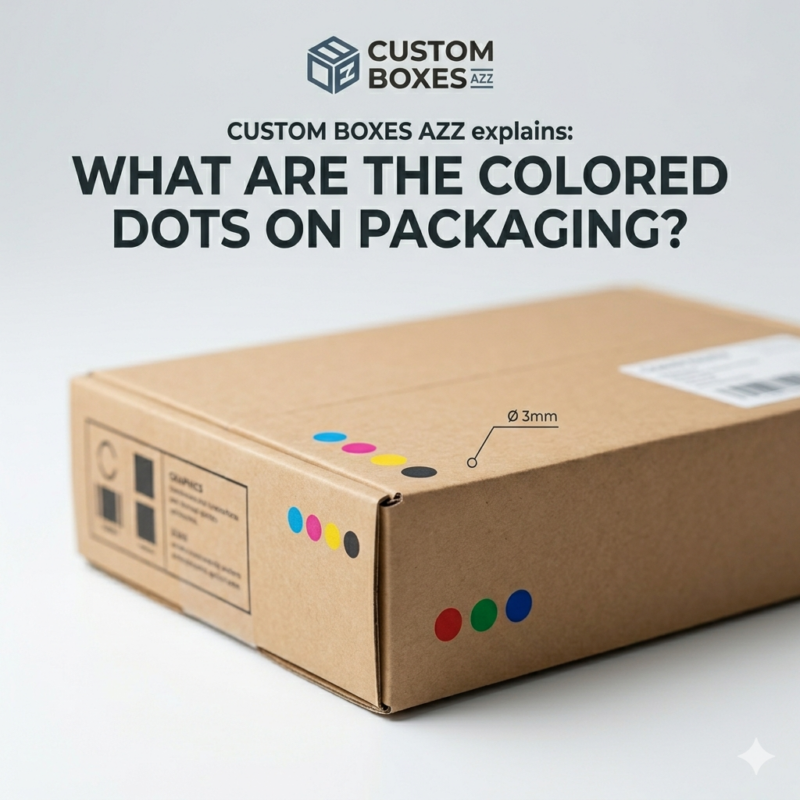
When you look closely at cardboard boxes, food wrappers, labels, or retail packaging, you may notice tiny coloured dots or squares printed somewhere along the edges. Most people ignore them, but if you work in retail, eCommerce, manufacturing, or branding, those marks actually play a very useful role.
The coloured dots on packaging are commonly linked to printing controls, colour consistency, and packaging production quality. They help packaging manufacturers maintain accurate printing during the production process. In some cases, they are also connected to alignment and cutting systems used by industrial packaging machinery.
For businesses ordering custom boxes UK suppliers produce, understanding these marks can help you make smarter packaging decisions and communicate more effectively with your packaging manufacturer.
Whether you own a small online shop, a bakery, a cosmetics brand, or a luxury retail business, learning how packaging printing works gives you better control over your branding.
This guide explains:
- What the coloured dots on packaging mean
- Why they matter in printing
- How packaging manufacturers use them
- Different printing methods in the UK packaging industry
- Common myths about coloured dots
- How they affect custom packaging quality
What Are the Coloured Dots on Packaging?
The coloured dots on packaging are usually known as printer’s colour bars, registration marks, or process control patches.
They are mainly used during the commercial printing process to ensure colours are printed correctly and consistently across thousands of boxes, labels, cartons, or wrappers.
You’ll often see them:
- Along the edges of cardboard sheets
- On product packaging flaps
- Hidden underneath folding sections
- Near trim lines
- On food and cosmetic packaging
- Around printed labels and sleeves
These dots are not random decorations. They are technical indicators used by packaging printers.
For businesses ordering custom packaging boxes UK manufacturers create, these marks help maintain professional print quality across every packaging run.
Why Packaging Printers Use Coloured Dots
Commercial packaging printing requires precision. A slight colour mismatch can completely change how a brand looks.
Imagine ordering luxury black gift boxes and receiving a faded grey shade instead. Or printing skincare boxes where the gold colour appears bronze on half the batch.
That is where colour control marks become essential.
Main Reasons Coloured Dots Are Used
| Purpose | Explanation |
|---|---|
| Colour Accuracy | Ensures inks print in the correct shade |
| Registration Control | Aligns different ink layers correctly |
| Print Consistency | Keeps colours identical across batches |
| Quality Control | Detects printing problems early |
| Machine Calibration | Helps operators adjust printing equipment |
Packaging manufacturers across the UK rely on these systems for accurate large-scale production.
At companies providing bespoke packaging UK solutions, colour consistency is especially important because branding directly affects customer trust and product presentation.
Understanding CMYK Printing Dots
Most packaging is printed using the CMYK colour system.
CMYK stands for:
- Cyan
- Magenta
- Yellow
- Key (Black)
These four colours combine to create almost every colour you see on printed packaging.
The coloured dots you notice are often related to these inks.
How CMYK Works in Packaging Printing
| Colour | Purpose in Printing |
|---|---|
| Cyan | Creates blue and cool tones |
| Magenta | Produces red and pink tones |
| Yellow | Adds brightness and warmth |
| Black | Adds depth and detail |
During printing, machines layer these colours together using tiny dots. If one colour shifts slightly, the final packaging colour changes too.
That is why registration marks and colour bars are critical for high-quality packaging production.
Brands ordering custom boxes London packaging suppliers manufacture often request exact Pantone or CMYK colour matching to maintain branding consistency.
Are Coloured Dots on Packaging Required?
Not always visibly.
In some packaging styles, these marks are trimmed away before final assembly. In others, small portions may remain visible on the finished product.
Whether they appear depends on:
- Printing method
- Packaging design
- Cutting layout
- Production efficiency
- Packaging material
You’ll commonly see them on:
- Cardboard cartons
- Food wrappers
- Corrugated packaging
- Cosmetic boxes
- Shipping cartons
- Labels and sleeves
Premium brands using luxury gift boxes UK suppliers create may hide these marks entirely for cleaner presentation.
Common Types of Packaging Printing Marks
Different printing systems use different control marks.
1. Colour Bars
Colour bars measure ink density and consistency.
They help operators check whether colours are printing evenly across the sheet.
2. Registration Marks
Registration marks ensure each colour layer aligns perfectly.
Without them, packaging graphics may appear blurry or shadowed.
3. Crop Marks
Crop marks indicate where packaging sheets should be cut.
4. Density Patches
These help maintain colour saturation during high-speed printing.
5. Calibration Targets
Used to test machine settings before full production begins.
How Packaging Printing Works
To understand coloured dots properly, it helps to know how packaging is printed.
Step-by-Step Packaging Printing Process
| Step | What Happens |
|---|---|
| Design Creation | Artwork is prepared digitally |
| Colour Separation | Design splits into CMYK channels |
| Plate Preparation | Printing plates are created |
| Ink Application | Printing press applies inks |
| Registration Alignment | Colours are aligned precisely |
| Cutting & Folding | Packaging is shaped and assembled |
| Quality Inspection | Final print quality is checked |
Businesses ordering custom packaging for small business UK services often benefit from understanding this workflow because it helps reduce printing errors and delays.
Why Colour Accuracy Matters in Packaging
Packaging is one of the first things customers notice about your product.
Even small colour variations can affect:
- Brand recognition
- Product appeal
- Customer trust
- Shelf visibility
- Luxury perception
Think about famous retail brands. Their colours remain consistent everywhere because they use strict print quality controls.
This matters even more in industries like:
- Cosmetics
- Food packaging
- Luxury retail
- Candles
- Jewellery
- Fashion accessories
Brands investing in custom gift packaging UK solutions usually prioritise colour consistency because premium presentation directly influences customer perception.
Coloured Dots vs Packaging Symbols
Many people confuse coloured dots with packaging symbols.
They are completely different.
Difference Between Packaging Dots and Symbols
| Coloured Dots | Packaging Symbols |
|---|---|
| Used for printing control | Used for consumer information |
| Help printers maintain accuracy | Explain recycling, handling, or safety |
| Mostly technical | Mostly customer-facing |
| Often hidden on edges | Usually visible on packaging |
Examples of packaging symbols include:
- Recycling icons
- Food safety marks
- CE marks
- FSC certification
- Fragile symbols
If you are learning more about packaging materials, this guide on what is cardboard packaging in the UK can help explain how packaging structures and printing work together.
Do Coloured Dots Affect Packaging Quality?
Indirectly, yes.
They do not strengthen the box physically, but they improve visual quality significantly.
Without proper colour control:
- Branding may look inconsistent
- Graphics can blur
- Logos may shift
- Colours can fade unevenly
- Packaging may appear cheap
This becomes especially noticeable in premium retail packaging.
For businesses using custom packaging boxes London services, maintaining high print standards is essential for creating a professional customer experience.
Are Coloured Dots Used on Eco-Friendly Packaging?
Yes.
Eco-friendly packaging still requires colour control and print calibration.
Sustainable packaging materials may include:
- Kraft paper
- Recycled cardboard
- Corrugated board
- Compostable materials
- FSC-certified paper
Printing on recycled surfaces can sometimes produce slightly different colour results because recycled fibres absorb ink differently.
This is another reason colour calibration marks remain important.
Businesses using protective packaging UK materials often combine sustainability with strong print quality for eCommerce and shipping purposes.
How Packaging Material Affects Printing
Different materials react differently to ink.
Packaging Material vs Print Behaviour
| Material | Print Result |
|---|---|
| Kraft Paper | Softer, muted colours |
| White Cardboard | Bright, sharp colours |
| Corrugated Board | Slight texture visibility |
| Coated Paperboard | Glossy, vibrant finish |
| Recycled Board | Slight colour absorption variation |
The thickness of cardboard also affects print quality and durability.
You can explore this more deeply in this guide about cardboard packaging thickness in the UK.
Why Small Businesses Should Understand Packaging Printing
You do not need to become a printing engineer, but understanding basic packaging printing helps you avoid expensive mistakes.
This is especially valuable if you:
- Run an online store
- Sell handmade products
- Launch subscription boxes
- Manage retail products
- Sell cosmetics or candles
- Offer gift packaging
Knowing how colour control works helps you:
- Approve print proofs confidently
- Communicate better with suppliers
- Protect your brand identity
- Avoid inconsistent packaging batches
Businesses working with custom box packaging Coventry and regional UK packaging providers often achieve better results when they understand packaging production basics.
The Role of Packaging Finishes in Colour Appearance
Packaging finish dramatically changes how colours appear.
For example:
- Matte finishes soften colours
- Gloss coatings make colours brighter
- Soft-touch lamination deepens dark shades
- UV coating adds shine to selected areas
That means the same printed design can look completely different depending on the finish you choose.
Matte vs Gloss Comparison
| Finish | Appearance | Best Use |
|---|---|---|
| Matte | Elegant and soft | Luxury brands |
| Gloss | Bright and reflective | Retail packaging |
| Soft Touch | Premium velvet feel | High-end products |
| Spot UV | Selective shine | Logo highlighting |
This guide on matte vs gloss packaging explains how finishes affect visual branding in greater detail.
Why Colour Consistency Matters for eCommerce Brands
Online businesses rely heavily on visual branding because customers cannot physically touch products before buying.
Consistent packaging helps:
- Build customer trust
- Improve unboxing experiences
- Increase repeat purchases
- Strengthen social media presentation
- Create premium perception
That is why many online brands invest in professional custom boxes UK packaging suppliers provide instead of generic stock packaging.
Even simple shipping boxes benefit from proper print consistency.
How UK Packaging Manufacturers Check Print Quality
Professional packaging manufacturers use several quality control systems.
Common Print Quality Checks
- Ink density measurement
- Colour matching systems
- Registration alignment checks
- Print proof comparisons
- Spectrophotometer testing
- Sheet inspection cameras
Larger packaging facilities may monitor thousands of printed sheets per hour during production.
Companies producing custom box packaging Glasgow and nationwide packaging solutions often use automated systems to maintain consistency across large orders.
Do Digital Printing Methods Still Use Colour Marks?
Yes, although differently.
Digital printing relies more on software calibration than traditional plate alignment, but colour control is still necessary.
Digital printing is popular for:
- Short packaging runs
- Seasonal packaging
- Subscription boxes
- Limited-edition branding
- Startup packaging
Many small businesses prefer digital printing because it allows lower minimum order quantities.
Packaging Design Mistakes That Affect Print Quality
Poor design setup can create printing issues even before production starts.
Common Packaging Design Problems
| Mistake | Result |
|---|---|
| Low-resolution artwork | Blurry printing |
| Incorrect colour mode | Colour mismatch |
| Missing bleed area | Cropped designs |
| Thin text lines | Hard-to-read printing |
| Wrong file format | Production delays |
Working with experienced packaging suppliers helps prevent these issues.
If your business also uses branded bags, custom packaging bags UK services can help create consistent branding across all packaging materials.
Request a Quote
Why Packaging Printing Is More Technical Than Most People Realise
Packaging combines:
- Engineering
- Branding
- Material science
- Printing technology
- Logistics
- Customer psychology
Something as simple as a tiny coloured dot actually represents a sophisticated print quality system designed to maintain consistency across thousands of packages.
That is why professional packaging manufacturers spend significant time calibrating machinery before production starts.
How CustomBoxes Azz Supports High-Quality Packaging
At CustomBoxes Azz, packaging is not just about making boxes. It is about helping businesses create packaging that looks professional, consistent, and memorable.
Whether you need:
- Retail packaging
- Luxury gift boxes
- Protective shipping cartons
- Branded eCommerce boxes
- Bespoke rigid packaging
- Small business packaging
understanding print quality and colour consistency plays a major role in the final result.
Businesses searching for reliable custom packaging boxes UK solutions often benefit from working with suppliers that understand both branding and technical printing requirements.
Final Thoughts on the Coloured Dots on Packaging
The coloured dots on packaging may seem small, but they play a huge role in packaging production.
They help printers:
- Maintain accurate colours
- Align graphics correctly
- Prevent print defects
- Ensure branding consistency
- Deliver professional-quality packaging
For brands investing in custom packaging, these tiny marks represent the precision behind modern packaging manufacturing.
The next time you notice coloured dots on a cardboard box or printed wrapper, you will know they are part of the system that keeps packaging looking sharp, consistent, and professional across the UK retail market.
What do the coloured dots on packaging actually tell you?
The coloured dots on packaging mainly help printers maintain colour accuracy during production. They are often called colour bars or registration marks, and they allow printing machines to check whether every colour layer is aligned properly. If the colours shift even slightly, logos and graphics may look blurry or inconsistent.
You usually find these dots near the edges of cardboard sheets, labels, or folded flaps. Most customers never notice them because they are part of the technical printing process rather than the design itself.
If you order custom boxes UK businesses commonly use for retail or eCommerce packaging, these colour marks help ensure your branding stays consistent from one batch to another. This matters even more for luxury brands where accurate colour matching can affect how premium your products appear to customers.
Are coloured dots on packaging linked to recycling or packaging safety?
Many people assume coloured dots are recycling symbols or safety indicators, but that is usually not the case. In most situations, these dots are connected to printing quality control rather than environmental information.
Recycling symbols are normally separate icons printed clearly on the packaging. Coloured dots are smaller technical marks used during manufacturing. They help printers balance ink levels and keep designs aligned correctly during high-speed production.
If your business uses bespoke packaging UK suppliers provide, understanding this difference can help you communicate better with your packaging manufacturer. Some eco-friendly packaging also includes coloured control marks because sustainable materials still require accurate printing. Recycled cardboard and kraft paper can absorb ink differently, so printers need these marks to maintain consistent branding across every box or carton.
Why do some packages have visible coloured dots while others do not?
The visibility of coloured dots depends on the printing layout and how the packaging is trimmed after production. On some boxes, the marks are hidden inside folded flaps or cut away entirely. On others, small sections remain visible near the edges.
Packaging manufacturers often prioritise production efficiency, especially for large-scale orders. Removing every printing mark completely can increase waste and production costs. That is why you sometimes notice small colour bars on food packaging, shipping cartons, or retail boxes.
Brands investing in custom packaging boxes UK services may request cleaner finishing for premium products. Luxury retail packaging often hides these marks carefully to maintain a polished appearance. If your packaging design includes dark colours, foil stamping, or matte finishes, printers usually pay even closer attention to visible print control areas during production.
Do coloured dots affect the quality of cardboard packaging?
The coloured dots themselves do not make packaging stronger or weaker, but they do affect the overall visual quality. These marks help printers maintain sharp graphics, accurate colours, and professional-looking branding across the entire print run.
Without proper print calibration, packaging colours may appear faded, uneven, or blurry. This can make even high-quality products look cheap or inconsistent. Businesses that rely on visual branding often pay close attention to packaging print accuracy because customers notice these details immediately.
If you are learning more about packaging materials, this guide on cardboard packaging in the UK explains how cardboard structure and print quality work together. Strong packaging combined with accurate printing helps create a more professional customer experience, especially for retail and eCommerce brands.
Are coloured dots used on luxury packaging too?
Yes, luxury packaging still uses colour calibration systems during production. Premium packaging often requires even more precision because high-end branding depends heavily on visual presentation.
Luxury packaging usually includes finishes like soft-touch lamination, foil stamping, embossing, and spot UV coating. Even slight colour differences can become obvious on these premium surfaces. That is why printers monitor colour density carefully throughout the manufacturing process.
Businesses ordering luxury gift boxes UK customers expect to look elegant often request sample proofs before final printing begins. This allows brands to confirm that colours, textures, and finishes match their expectations. The coloured control marks may not always remain visible on finished luxury boxes, but they still play an important role during production behind the scenes.
Why is colour consistency so important for custom packaging?
Colour consistency helps customers recognise and trust your brand. When packaging colours change between orders, products can look unprofessional or poorly made, even if the actual product quality is excellent.
Think about famous retail brands. Their colours stay almost identical across every box, label, and shopping bag. That consistency helps customers identify products quickly on shelves and online stores.
Businesses using custom gift packaging UK solutions often rely on exact colour matching to create memorable unboxing experiences. This becomes especially important for cosmetics, candles, jewellery, and fashion packaging where appearance strongly influences buying decisions. Professional printing systems use coloured dots and registration marks to maintain that consistency throughout large production runs.
Do digital printing machines still use colour control marks?
Yes, digital printing still relies on colour calibration, although the process works a little differently compared to traditional offset printing. Digital systems use software-based colour management alongside physical print controls to maintain accuracy.
Digital printing is popular for short-run packaging orders, startup brands, seasonal packaging, and limited-edition products. Since there are no traditional printing plates involved, setup times are usually faster and more flexible.
Many businesses choosing custom packaging for small business UK solutions prefer digital printing because it allows lower minimum order quantities. Even though digital systems are highly automated, colour checking remains essential. Printers still monitor colour output carefully to ensure logos, graphics, and branding appear consistent across every printed package.
Can packaging material change how colours look when printed?
Yes, packaging material can dramatically affect the final print appearance. Different surfaces absorb ink differently, which changes how colours appear after printing.
For example, kraft paper often creates softer and more muted colours because of its natural brown surface. White cardboard usually produces brighter and sharper print results. Recycled cardboard may absorb ink unevenly depending on the fibre composition.
If you are comparing packaging materials, this guide on cardboard packaging thickness explains how board structure can affect both durability and print quality. Businesses ordering premium packaging often test different materials before production to see how colours behave under specific finishes and coatings.
Why do packaging companies use CMYK colours for printing?
CMYK printing allows packaging manufacturers to create a huge range of colours using only four primary ink colours: cyan, magenta, yellow, and black. These colours combine in tiny layered dots to produce logos, graphics, gradients, and detailed images.
Commercial packaging printers use CMYK because it works efficiently for large-scale production. It also helps maintain consistent results across thousands of printed boxes or labels.
Companies producing custom boxes London retailers often request use CMYK systems alongside Pantone colour matching for more precise branding. During printing, coloured calibration marks help operators monitor how these inks interact on the packaging material. If one colour layer shifts slightly, the entire printed design may look different, which is why careful monitoring is so important.
How can you improve print quality for your custom packaging?
Improving print quality starts with good design preparation and choosing the right packaging supplier. High-resolution artwork, correct colour settings, and suitable packaging materials all help create better final results.
You should also think about finishes like matte, gloss, or soft-touch lamination because they can change how colours appear after printing. Some finishes create brighter colours, while others produce a softer luxury look.
This guide on matte vs gloss packaging explains how different finishes affect branding and packaging presentation. Businesses working with experienced custom packaging boxes UK suppliers usually achieve more reliable print quality because professional manufacturers understand how materials, colours, and printing systems work together during production.
